Summer Exhibition on Soviet-era Mass Tourism in Pärnu
Text Timo Raussi

Photos Visit Estonia / Tõiv Jõul / Pärnu Museum
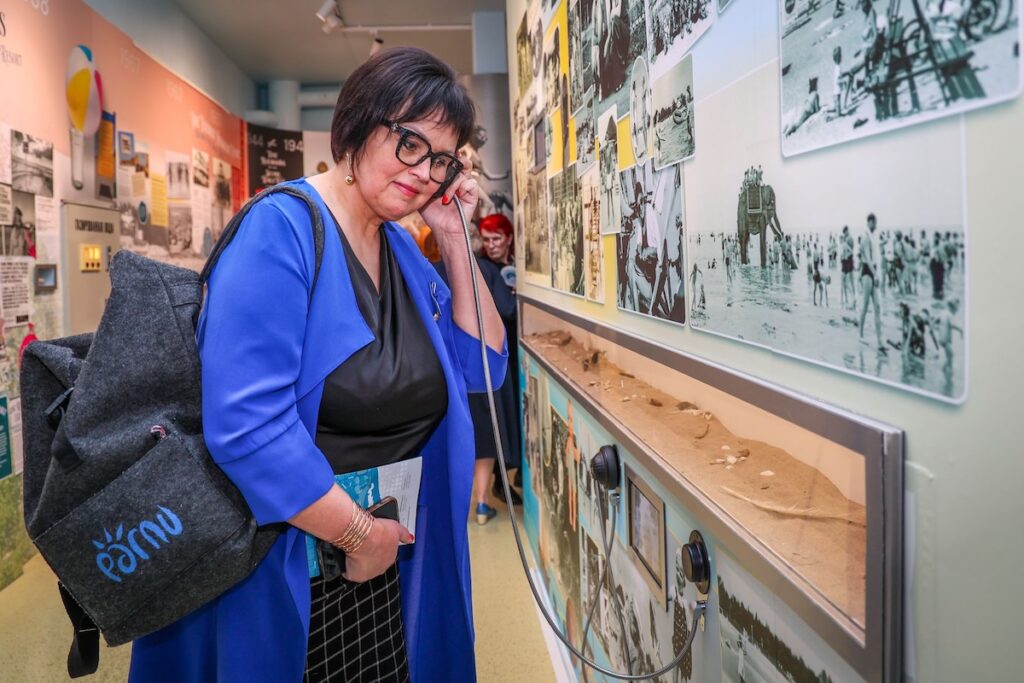
Just before Midsummer, Pärnu Museum opened a new summer exhibition, “The Leisure Factory: Soviet-Era Mass Tourism and Architecture”. It explores Pärnu’s holiday culture and the architectural character of its holiday facilities during the decades of Soviet rule.
While Pärnu in the early 20th century and during Estonia’s first independence was mainly a summer spa town for the elite, when Soviet rule arrived it was quickly reshaped into a year-round rehabilitation and holiday destination for the working population. A broad infrastructure of sanatoriums, hotels and holiday resorts was built in the city and the surrounding area, intended to function like a conveyor-belt-style “leisure factory”. Thousands of people exhausted by everyday life were received and processed into rested and relaxed workers full of renewed energy for labour.
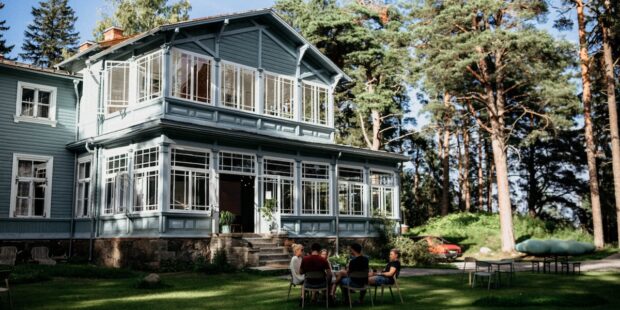
The extension of the concept of holidaymaking to large masses of people was also strongly reflected in the city’s spatial planning and architectural design. The legacy of that period is still visible in Pärnu’s urban landscape and in the surrounding villages. As a result, the region’s recent architectural heritage has developed a distinctive layer of its own compared with many other Estonian towns.
“In Soviet Estonia, Pärnu was chosen as a true holiday oasis whose task was to help Soviet people recover from the strains of hard working life. At the same time, the situation created a kind of paradox: because so many resources were directed into the holiday sector, architects also had the opportunity to express themselves much more freely in this building stock than was usually the case,” Pärnu Museum exhibition manager Svea Volmer-Galland told Estonian Public Broadcasting ERR.
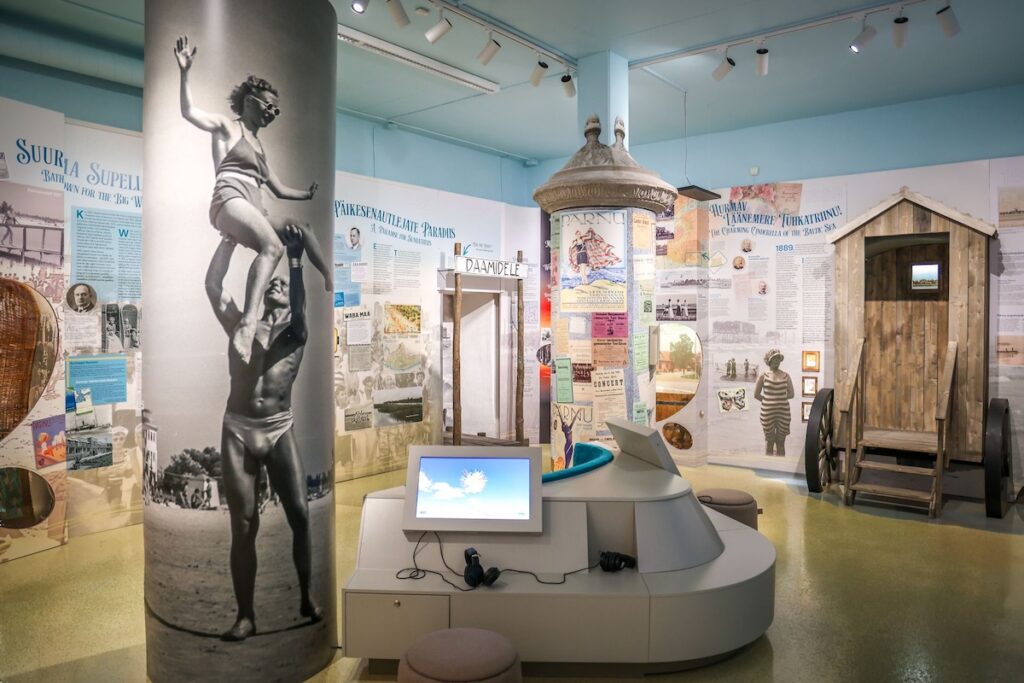
The Leisure Factory exhibition is on display until 27 September in the main building of Pärnu Museum on Aida Street, which is open to the public from Tuesday to Sunday from 10:00 to 19:00.
The museum is also showing its permanent exhibition, thoroughly renewed earlier this year, with four sub-themes: “The Story of Our Origins”, “A Tale of Two Cities”, “The Birth of the Nation-State” and “Pärnu, The Summer Capital of Estonia”.
Tickets to the museum cost €15 for adults, €11 for schoolchildren and pensioners, or €31 for families. A combined ticket is also available for those interested in visiting the main museum, the Red Tower on Hommiku Street and the Lydia Koidula Museum on Jannsen Street, priced at €23 per adult, €17 for schoolchildren and pensioners, or €48 per family. The Estonian Museum Card is not valid at Pärnu Museum.
For the summer, a temporary tourist information point has also been set up in the entrance hall of the museum’s main building. In connection with it, a second summer exhibition, “The Story of the Pärnu Elephant”, is on display from 20 June to 20 August. It is free for all visitors and tells the history and story of the elephant figures seen on the beach and elsewhere in Pärnu’s streetscape. In fact, there are many more stories than just one or two.
To learn more about this and similar topicsevents Exhibition mass tourism Pärnu Pärnu Museum recent history sanatoriums Soviet era