Kaja Kunnas: Two Countries, Many Stories
Text Susanna Poikela
Photos Tom Röllich
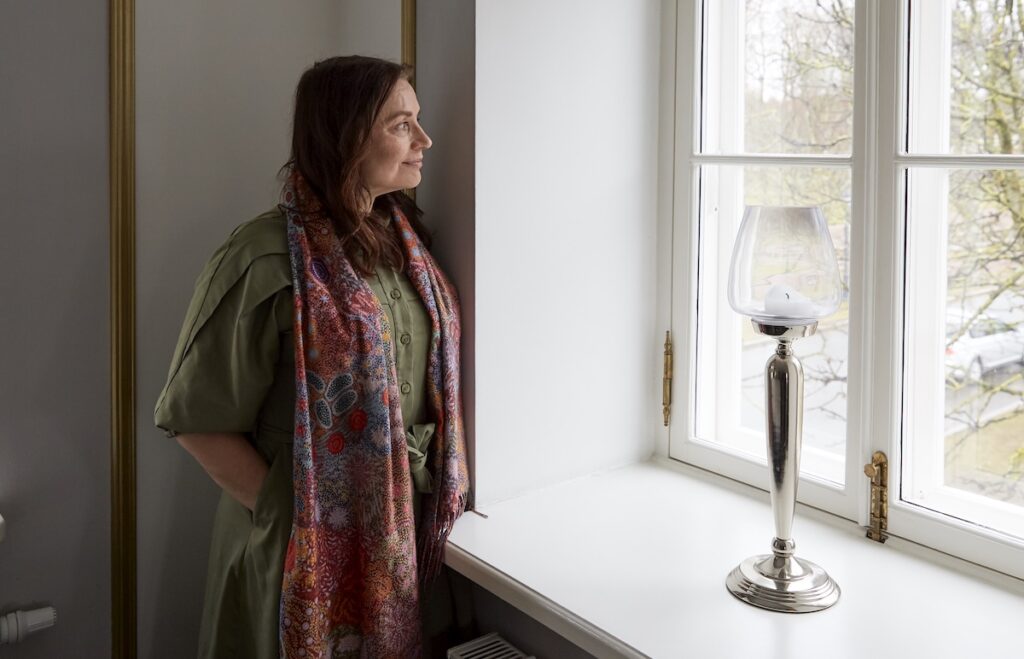 In Kaja’s childhood home, both Finnish and Estonian were spoken, and she has continued the same tradition in her own family. The Estonian language has been preserved in the family from generation to generation for over a hundred years.
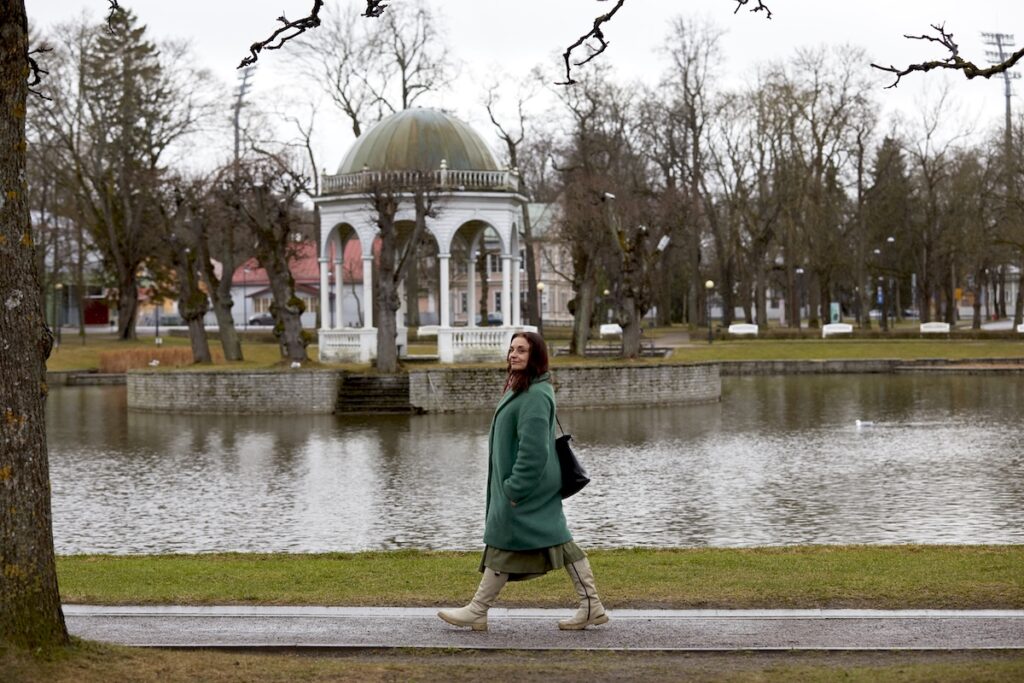
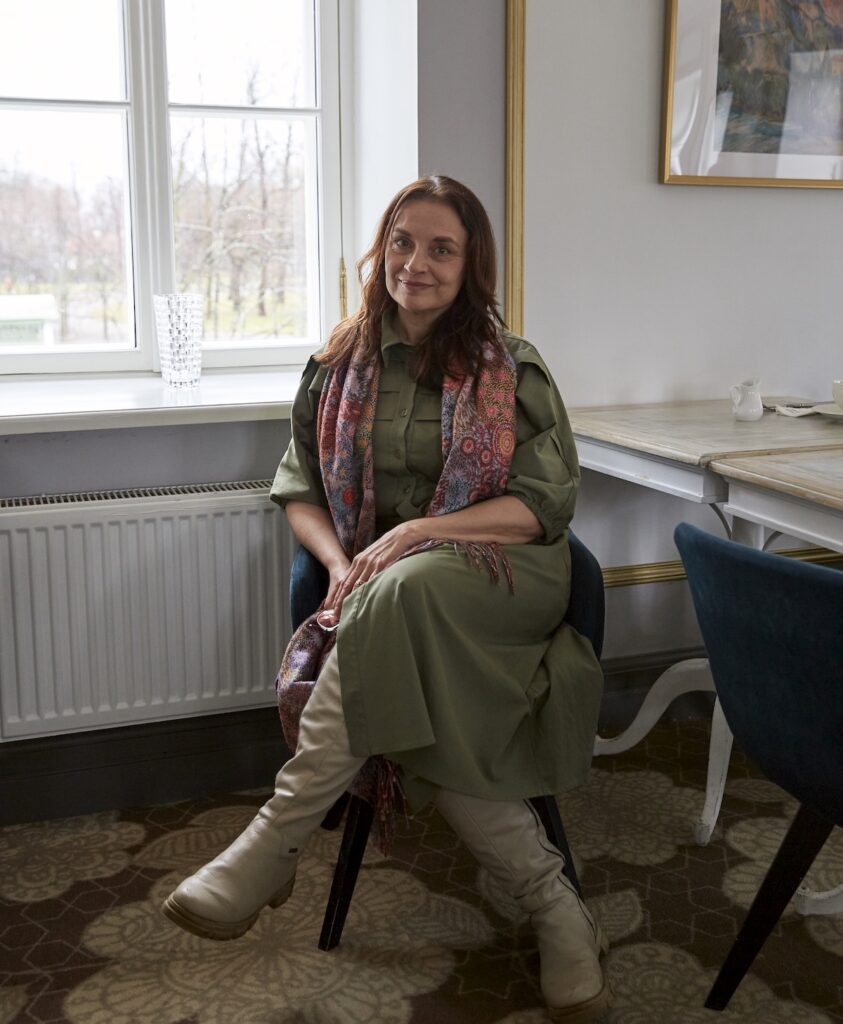
Journalist Kaja Kunnas sits opposite me in a café. Through the windows there is a view of the swan pond in Kadriorg Park in Tallinn. The rainy, grey day remains outside the thick stone walls. Between us, cups of hot coffee are steaming.
We recall how exactly 13 years ago Kaja Kunnas interviewed me, an entrepreneur who had moved to Estonia. This time, the roles are reversed. Now it is my turn to interview Helsingin Sanomat’s Finland–Estonia correspondent, Kaja Kunnas.
Estonian roots
The connection to Estonia has been preserved in Kunnas’s family for over a hundred years. Kaja’s grandfather moved from Estonia to Finland in the 1920s and began working as a lecturer in the Estonian language at the University of Helsinki. In Finland he met his future wife, a Finnish translator and teacher. Soon they started a family.
Maintaining Estonian as a second home language is certainly one reason why the bond with Estonia has lasted to this day. “When I was a child, there were theories in Finland that a child should only be spoken to in one language. But my father knew from his own experience that this claim was not true. Both Finnish and Estonian had always been spoken at home to him, and he continued this tradition in his own family,” Kaja Kunnas explains.
Trips behind the Iron Curtain
Kaja Kunnas visited relatives in Estonia with her mother and siblings. She first travelled to her grandfather’s homeland at the age of four. However, her father could not join those trips. “My father did not want to travel to Estonia in the 1970s, because he would not have been allowed to go to Muhu Island, which was his Estonia and where he had spent his childhood summers. Secondly, his childhood friend had been subjected to KGB interrogation and recruitment attempts because of our visits.”
Later, around the turn of the 1980s and 1990s, her father was again able to travel to his family’s lands. He also inherited his father’s house on Muhu Island, which is still used by the family.
Shortly before Estonia regained independence, the University of Tartu and the University of Helsinki signed an exchange agreement. Kunnas applied to study in Tartu as an exchange student and was accepted. In Helsinki she had studied sociology, but in Tartu her subject changed to Estonian literature and history.
Kunnas says that on the eve of regained independence, the values of young Estonians felt more conservative than those of their Finnish peers. “They wanted to adopt everything that had existed in independent Estonia and belonged to that world. Finding continuity was extremely important. I had fellow female students, some of whom wanted to become housewives. Of course, this never really materialised in practice, and I don’t know how serious these young women were at the time. Today many of them have had successful careers,” Kunnas recalls.
Kunnas’s Finnish-Estonian family
Kunnas moved to Estonia for work in 2002, when she began working as a foreign correspondent for Helsingin Sanomat. The contract was initially for one year. “When I came here to Estonia, I genuinely wanted to come, even though the idea of staying longer felt unfamiliar. I already had a lot of knowledge about the country, ready-made contacts, and I spoke the language. I felt I had a lot to contribute in my work.”
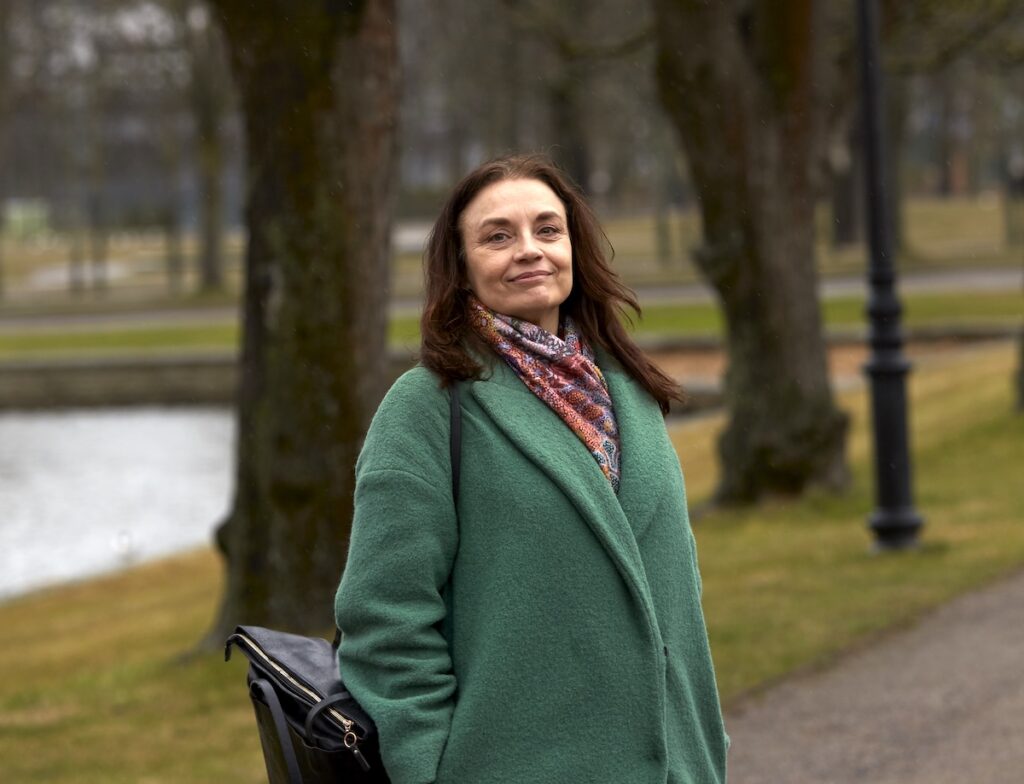
Fate intervened. During her assignment, Kaja met her future husband. The meeting soon led to marriage and a family. Now two of their three children have already left the Finnish–Estonian nest. One studies at the University of Turku, and the other at the University of Tartu.
“It is interesting to watch the children, because they have a strong dual identity. My children did not experience the Iron Curtain that I did at their age. They have attended confirmation school in Finland, and made friends there. They speak both languages perfectly and regularly visit relatives in Finland.”
At present, Kunnas also commutes regularly between Tallinn and Helsinki. She enjoys her work as a Finland–Estonia correspondent, which she has now been doing for almost three years. A few years ago, however, she took a longer break from her work as a journalist at Helsingin Sanomat. “At that time I wrote our second book with Marjo Näkki, ‘Itämeren turvatarkastus—Kun sodan uhka palasi’, Gummerus, 2023. I was able to focus fully on the book. I also wrote a few longer articles for Suomen Kuvalehti.”
Societal changes in Estonia
Over the decades, Kunnas has seen Estonia change profoundly. “The biggest change in Estonia has been the rise in living standards and the disappearance of extreme poverty. In this century, street children have disappeared and crime has decreased. Over roughly the past ten years, internationalisation and immigration from outside the former Soviet Union have increased.”
In Kunnas’s view, values have also become more liberal compared to the period after regained independence. “Although Estonia may seem and indeed is slightly more conservative than Finland, the overall direction has been towards greater liberalism. This trend has continued regardless of which political force has been in power.”
Two countries, many stories
Over the course of her career, Kaja Kunnas has written hundreds of articles. Not all stories are forgotten. One of them is about an Estonian construction worker in Finland who was at the same time building a house in Estonia. During the reporting process, the house was completed, but the man himself had become estranged from the home he had built. He felt like a stranger in his own house.
After the article, Kaja Kunnas heard that the man had ultimately decided to stay in Finland. The story was moving, because everything seemed fine, yet it was not. Years of living in another country had changed this person’s life.
Kaja Kunnas herself has not had to choose between Helsinki and Tallinn. She works regularly in Finland, and feels she belongs to both countries. Perhaps that is why she is able to write so precisely about people and phenomena between the two countries.
A radical language reform underway in Estonia
Kaja Kunnas is interested in Estonia’s language reform, in which the language of instruction in Russian-language schools is being changed to Estonian. The change is radical and rapid, especially in areas where everyday language is still Russian.
“I follow the development with interest. Estonian-speaking society is extremely unanimous on this issue. The only criticism directed at the reform has been why it was not done earlier or why it is not being implemented more strictly.”
Kunnas also follows the issue critically and with some curiosity about how the reform will succeed in practice. Among Russian-speaking Estonians, opinions are fairly evenly divided: half support the reform, and half oppose it.
“I study Russian in my free time, and I have language partners in Narva. They have pointed out how difficult it is to find anyone in Narva with whom to practise Estonian. Both of them are teachers who are required to have a C1 level.” Kunnas notes that there are many challenges to learning Estonian in Russian-speaking regions. The home language and environment are Russian. Only the language of instruction is Estonian. For many children who genuinely want to learn Estonian, it is very difficult, because the language exists only inside the classroom.
“On the other hand, I wonder why Estonian has not been successfully taught in these schools as a foreign language from the beginning. It has not been a question of Russian-speakers not wanting to learn. Opportunities to learn the language have simply not been available, because people have lived in a Russian-speaking bubble. It is quite difficult to break out of that.”
To learn more about this and similar topicsEducation Estonian history Estonian Language Estonian–Finnish relations Finland Independence Kaja Kunnas