Am I Seeing Things, or Has My Picture Been Photoshopped?
Text Timo Raussi
Photos Aime Ritari
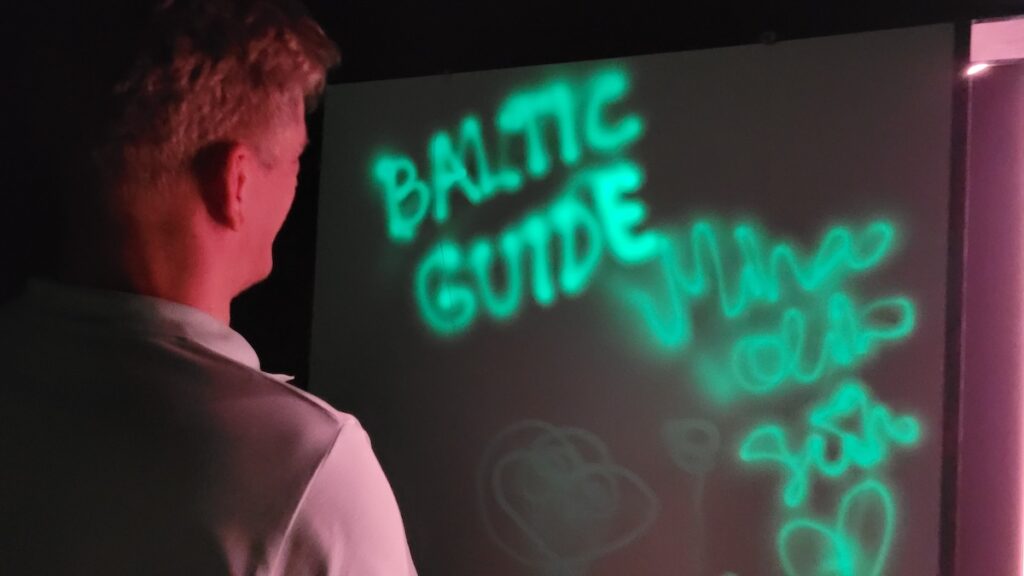 Light painting with an infrared flashlight at the Museum of Illusions.
The visual world around us is constantly changing. Watching the social media habits of my friends’ children and my own offspring, who are already adults, you notice that a corner of the sofa at home is no longer always enough for making TikTok videos and Instagram selfies. There is a need to find something striking in the background, something that would create a wow effect when it spreads through a young person’s social circle.
Two new experience centres focusing on visuality, illusions, and taking spectacular selfie photos and videos opened their doors in Tallinn’s Old Town around the turn of the year. Both also call themselves museums. We visited them and conducted an experiment to see whether, as the song goes, even an old person might dare to become young again and play like a child. At least the information we had read online encouraged us to give it a try.
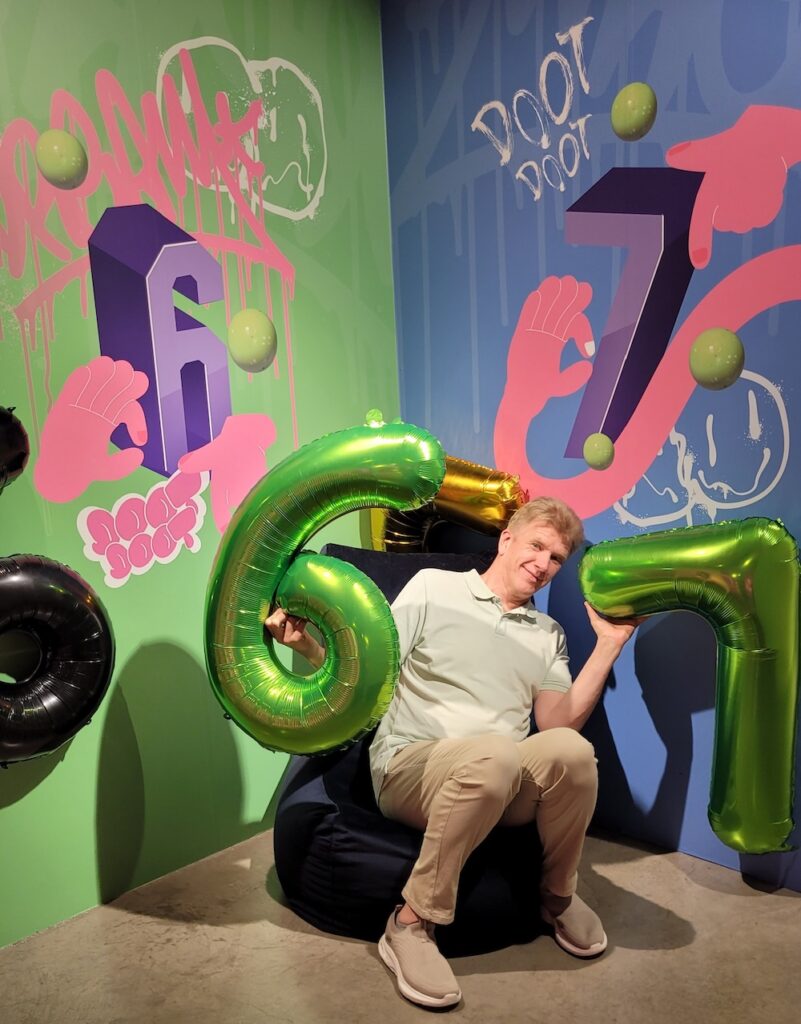
Museum of Fun—MoF
Translated directly as the “Museum of Fun”, it advertises itself as Estonia’s first selfie museum. The place can be found on the third floor of a new shopping centre near the flower sellers on Viru Street. The lift is accessed through a clothing shop.
Weekend admission costs €15 for adults and €12 for those aged 5–18 and for students. The young man who sold us the tickets advised us to leave our outerwear and belongings in the lockers. The advice was good, since constantly putting a shoulder bag or shopping bag, umbrella, and everything else unnecessary out of the way and then picking it all up again is frustrating when you should be concentrating on taking photos.
But what is there to photograph? The museum has a little more than a dozen brightly coloured themed rooms and corners, albeit equipped with rather minimal props. They are intended as backdrops for expressive, humorous, or simply cool-looking poses.
Upon entering the space, one of the basic rules of selfie photography became apparent: your personality and extroversion have to be put fully into play. It also felt as though the colourful environment demanded something equally flamboyant from clothing and accessories for the end result to be cheerfully lively or “naturally crazy”. This theme is unlikely to be a problem for families with children or teenagers.
As I pondered this, some kind of midlife creative block slammed into place inside me. Facial expressions or instructions to “just relax and be yourself” were of no help. I became unnecessarily critical of the themed rooms: “Why is the rotary phone table bolted to the floor so far away from the sofa? It won’t fit in the picture if I try to lounge here like a teenager. That’s what we used to do when we chatted endlessly on the phone.”
But then my eyes caught sight of the ball pit. There, my inner child was finally unleashed, and a genuine smile appeared on my face. The “six-seven” corner, already familiar from the internet, didn’t make this middle-aged uncle feel awkward either, but instead inspired me to pose and joke around.
Watching out of the corner of my eye as two mothers and their preschool-aged children visited the museum at the same time, I realised that the Museum of Fun is a refreshing and unusual place precisely for them. Judging from the dozens of clicks from phone cameras, the customers belonging to the right target group were getting every bit of enjoyment out of their visit.
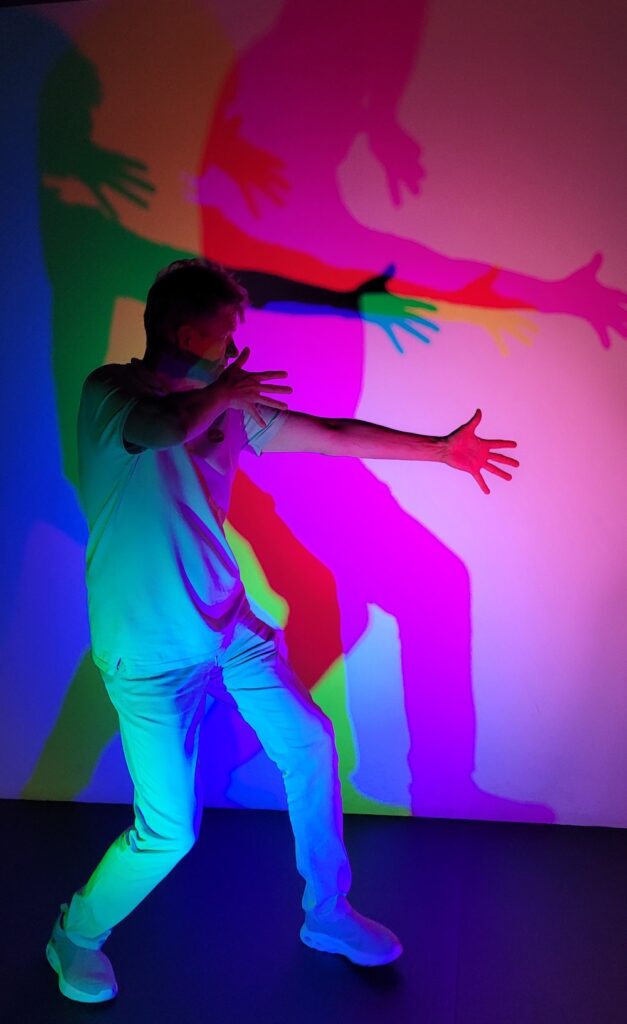
Museum of Illusions—MoI
The day’s second destination, the Museum of Illusions, is located on Rataskaevu Street in the labyrinthine but almost fully accessible renovated premises of the former Von Krahl theatre and music bar. Upon entering, we felt that we had arrived at a museum, albeit in a good, interactive way that positively took the customer experience into account.
In addition to the €15 ticket, we bought access to an immersive VR experience called “The Trail of Angels”. Sitting comfortably in an armchair and wearing VR headsets, you dive into the ethereal works of Lithuanian painter and composer Mikalojus Čiurlionis. His meditative music plays in the background. The calm experience, lasting just over 20 minutes and covering more than fifty paintings, was definitely worth the additional €7. The project has also won awards at several international festivals.
The museum hall presents images that create optical illusions in the human mind, 3D holograms, and early animated image sequences, explaining the background and execution of the illusions with wall texts in Estonian and English. Young guides were also circulating around the hall, tactfully and without being pushy approaching visitors to explain how the illusions work. When necessary, they also helped with their hints to “see the invisible”.
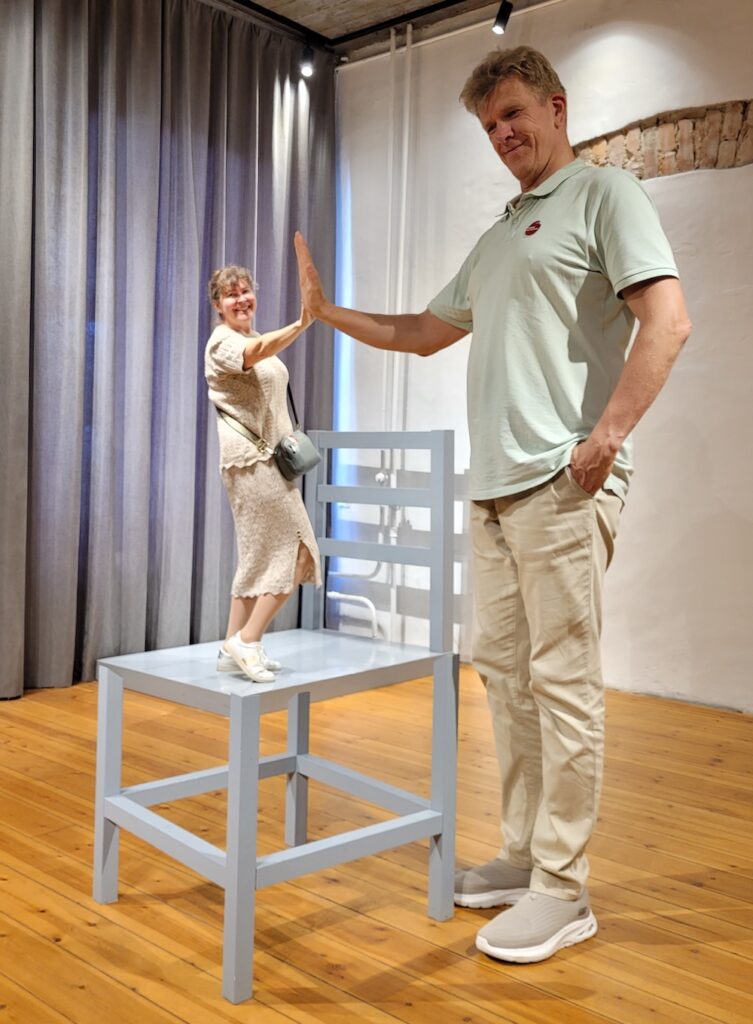
The museum’s two upper floors introduce illusions created using light, optics, viewing angles, and the physical properties of objects, following the familiar science-centre principle of trying things out for yourself. There are several excellent selfie photo spots, but alongside the visual wow experience, we also experienced several moments of amazement and insightful “aha” moments ourselves. Let the accompanying photographs speak for themselves.
In summary, it can be said that the two places have their own audiences, and they do not compete particularly strongly with each other. For a more adult taste, the Museum of Illusions offered genuinely high-quality content for the price of admission, so it gets a strong thumbs-up from me.
Museum of Fun, Viru 13/15, Tallinn
Open Mon–Sun 9–21
www.mof.ee
Email info@mof.ee
Museum of Illusions,
Rataskaevu 10, Tallinn
Open Mon–Fri 10–19, Sat–Sun 10–20
www.museumofillusions.ee
Email info@museumofillusions.ee
To learn more about this and similar topicschildren’s activities Family Activities fun museums Museum Museum of Fun Museum of Illusions visiting Tallinn