Lahemaa National Park: A Journey Through Nature, Coastal Villages, and Historic Manors
Text Timo Raussi
Photos Visit Estonia / Sven Začek,
Sten-Ander Ojakallas, City Bike, Kert Kruusakivi
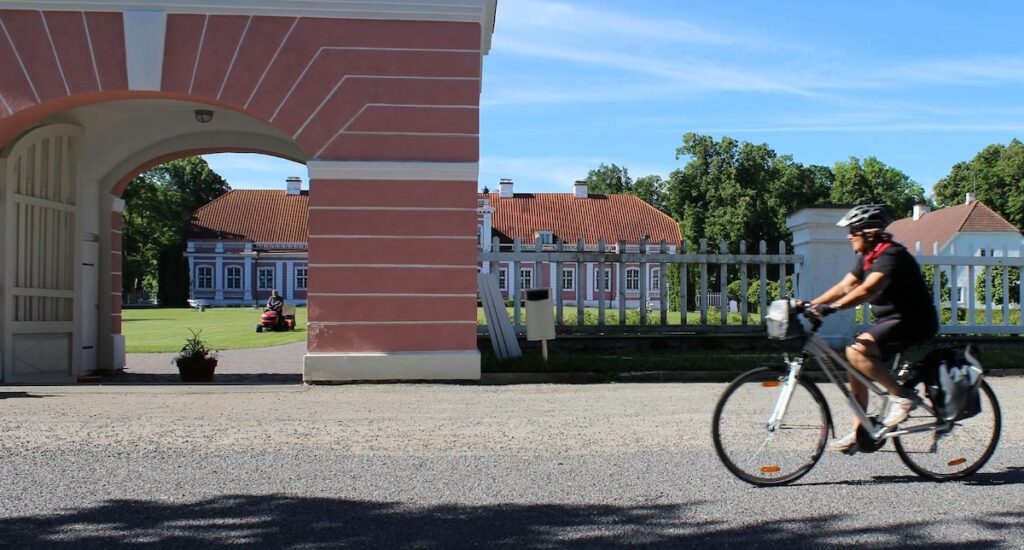 EuroVelo 11 passes through Lahemaa National Park, offering easy cycling on flat terrain and quiet country roads. This photo was taken at Sagadi Manor.
Located just over 70 kilometres east of Tallinn on Estonia’s northern coast, Lahemaa National Park is the country’s oldest and largest national park, established in 1971. Around two-thirds of its area consists of forests, wetlands, and sweeping landscapes, while the remainder covers shallow coastal waters dotted with small islands and glacial boulders. Its name, “Lahemaa”, or “Land of Bays”, comes from the park’s four major bays: Kolga, Hara, Eru, and Käsmu.
Lahemaa is remarkably diverse for such a compact area. Within short driving or cycling distances, visitors can explore forests, bogs, beaches, manor houses, historic fishing villages and even a former Soviet naval base. The park’s attractions are connected by well-maintained country roads and the EuroVelo cycling route.
Explore forests, bogs and the Baltic coast
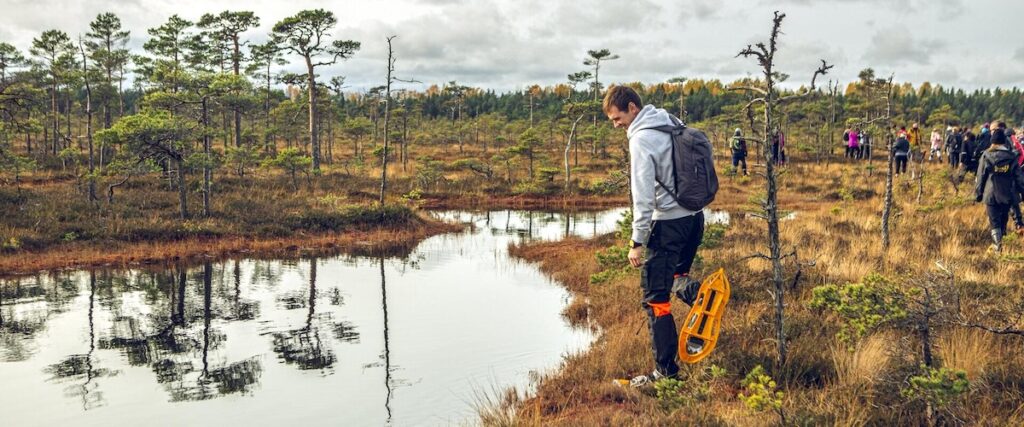
Forests cover more than 70 percent of Lahemaa’s land area, with pine, spruce and birch dominating the landscape, while lush deciduous woodland flourishes along river valleys. The best-known wetland is Viru Bog, where a 3.5-kilometre boardwalk leads visitors through the landscape to an observation tower offering sweeping views across the bog.
Along the coast, rocky headlands alternate with sandy beaches and coastal meadows. Massive glacial erratic boulders are among Lahemaa’s best-known natural landmarks. On the Käsmu Peninsula stands Majakivi, one of Estonia’s largest boulders, complete with a viewing platform on top.
For those visiting during summer, Võsu is Lahemaa’s best-known beach. Its wide sandy shore and shallow water make it especially popular with families. Smaller beaches can be found in Käsmu and in the nearby town of Loksa, where plans for a new spa hotel have recently been announced. Many of the coastal villages also have natural swimming spots.
The park offers more than 100 kilometres of marked hiking trails suitable for all ages. Besides the popular Viru Bog Trail, favourites include the Oandu Nature Trail, the Majakivi–Pikanõmme Trail, and the Nõmmeveski–Liiapeksi Trail. Before setting out, visitors can stop at the National Park Visitor Centre near Palmse Manor or the RMK Nature Centre in Oandu for maps and up-to-date trail information.
Historic manors, fishing villages and maritime heritage
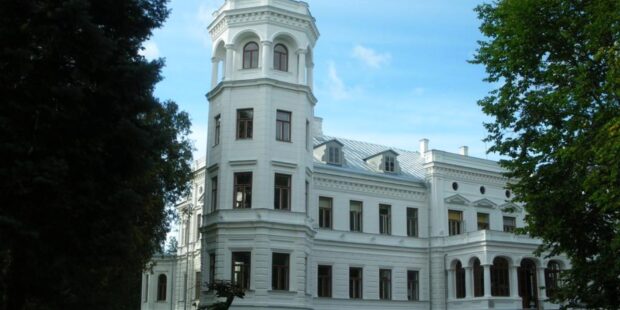
Lahemaa’s best-known cultural attractions are the manor houses of Palmse, Sagadi, Vihula, and Kolga. Palmse, with its orchards and beautifully restored estate buildings, is among Estonia’s finest manor complexes. Sagadi is home to the Estonian Forest Museum, while Vihula combines historic architecture with quality accommodation, spa facilities and restaurants. Kolga Manor, although still awaiting restoration, remains an impressive example of neoclassical architecture.
The park’s coastal villages are equally fascinating. Käsmu, known as the “Captains’ Village”, was home to a maritime school during the late nineteenth century, and many of its residents became captains of sailing ships. Today, its well-preserved wooden houses and Maritime Museum make it worth visiting at any time of year, not only during the annual Viru Folk festival. In Altja, traditional fishermen’s net sheds line the shoreline, while the nearby tavern serves classic Estonian country cuisine.
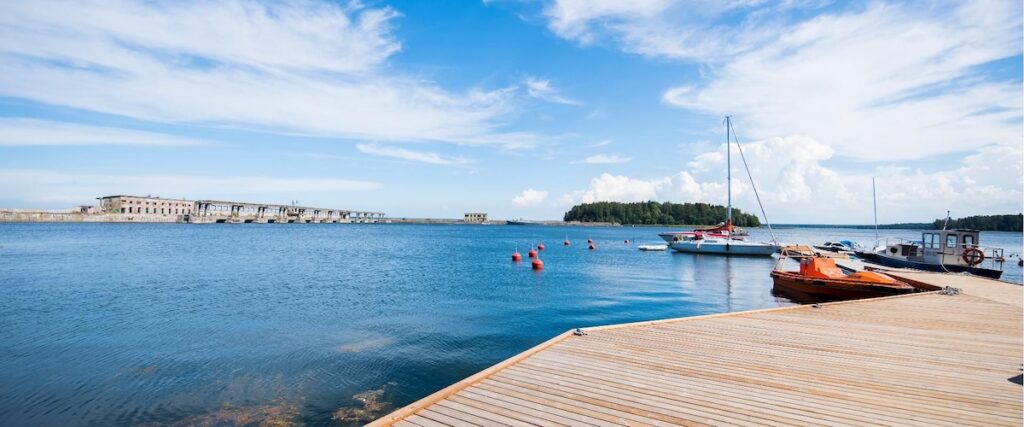
At Hara, the abandoned Soviet submarine base provides a striking contrast to the surrounding natural beauty. The decaying piers and concrete structures have become a favourite photography location, while exhibitions explain the site’s history. Visitors can also rent SUP boards, mountain bikes and a variety of saunas.
Art, food, and places to stay
At the tip of the neighbouring Pärispea Peninsula lies Purekkari, mainland Estonia’s northernmost point. Nearby is the Viinistu Art Museum, housed in the former buildings of a fishing collective farm and home to one of Estonia’s most significant private art collections. The museum showcases Estonian art from the nineteenth century to the present day, while its harbour courtyard hosts concerts and summer events. There is also a restaurant on site.
Food is another excellent reason to spend time in Lahemaa. Manor house restaurants serve contemporary cuisine built around local ingredients, including game, wild mushrooms, berries and freshly caught fish. Food critics have recently ranked the small restaurants in Käsmu and Võsu among the best outside Tallinn. During the harvest season, local farms sell honey, berries, apple juice and other produce at roadside stalls and village markets.
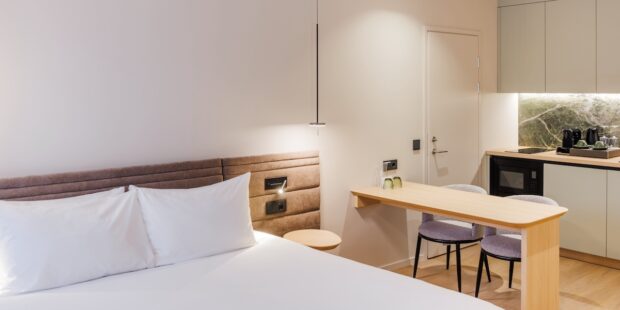
Accommodation ranges from elegant manor hotels at Vihula and Sagadi to cosy guesthouses in Käsmu, Võsu and Viinistu. A special mention goes to the boutique hotel run by a young entrepreneurial couple in Vergi Harbour. For hikers, RMK’s campsites and picnic areas offer an affordable way to experience the park, with most facilities free to use.
Lahemaa makes an excellent day trip from Tallinn, but spending two or three nights allows visitors to fully appreciate its hiking trails, historic landmarks, village atmosphere, local cuisine and tranquil evenings watching the sun set over the Gulf of Finland.
To learn more about this and similar topicsBog hiking trail Lahemaa manor houses national park Oandu Vergi Viinistu