Estonian Hotel and Restaurant Association: Rising Costs Are Now Driving Restaurants Out of Business
Text Timo Raussi
Photos Visit Estinia / Lauri Laan, Liis Markvardt
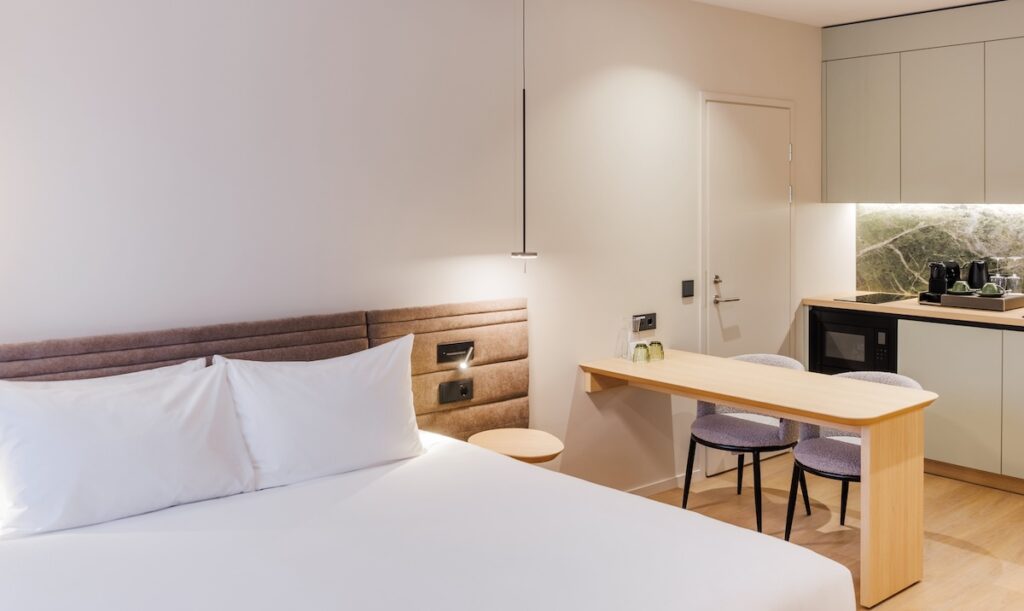 Self-catering accommodation partly reduces the need to eat out.
Estonia’s hotels have attracted a fairly good number of customers this summer, but revenue per room is falling. At the same time, restaurants continue to face difficult conditions, and businesses have closed their doors even in the middle of the busiest tourism season.
According to the Estonian Hotel and Restaurant Association, or EHRL, cost pressures in the sector have grown so great that nearly 600 restaurant businesses and 2800 jobs could disappear from Estonia over the next two years. Most of the losses would occur outside Tallinn.
Tourists are coming, but hotel revenues are falling
According to Statistics Estonia, accommodation establishments recorded 718,385 overnight stays in June, 1.9% more than a year earlier. Growth was concentrated mainly in Tallinn and came from foreign tourists, whose overnight stays increased by 3.3%.
Hotel occupancy was 80% in June and as high as 91% in July. However, these figures do not automatically mean better results. New hotels and short-term accommodation properties have opened in Tallinn during the first half of the year, intensifying competition. RevPAR, an industry profitability indicator combining hotel occupancy and room rates, fell by nearly 7% in June and 4.5% in July.

“The lower number of major events kept the average price of accommodation establishments in check. People are also increasingly making their bookings only at the last minute, which makes it difficult to forecast demand,” EHRL CEO Külli Kraner said in an interview with the Ärileht business publication on Tuesday.
Regional differences are significant. In Tallinn, hotel prices and revenues were clearly below last year’s levels. In Pärnu and Tartu, the situation was more normal, as Rally Estonia and other regional events supported tourism in southern Estonia.
“The pattern is clear. Tourists come to places where major events are organised, and the price level remains higher. Where there are no events, results remain below last year’s level,” Kraner says.
Restaurant costs are rising faster than revenues
Revenue in Estonia’s restaurant sector has remained unchanged over the past two years. At the same time, personnel, raw material and other costs have continued to rise. According to EHRL, the sector’s average profitability has consequently fallen from around 4% to just over 1%.
According to Kraner, restaurateurs can no longer finance necessary repairs and investments from their revenues. “The situation may not yet show up in interim financial reports, but soon it will begin to appear in the form of businesses closing down,” Kraner says.
Over the past year, several restaurants in Estonia have closed their doors, including six recommended by the Michelin Guide. Closures have continued this summer, with St. Vitus and Tai Boh among the Tallinn examples.
According to EHRL, a key problem is the combination of rising costs and high VAT. In Estonia, the VAT rate for restaurants is 24%, one of the highest in the EU. Restaurants cannot pass all their costs on to customers through their prices, as price increases would likely reduce customer numbers, both among locals and especially among Finns, who continue to regard Estonia’s fine-dining sector as reasonably priced.

The impact extends across the entire tourism sector
The restaurant sector employs around 20,000 people in Estonia, and its difficulties also affect local producers, services and tourism.
EHRL estimates that if cost pressures and weak profitability continue, nearly 600 restaurant businesses and 2,800 jobs could disappear from the country within a couple of years.
According to Kraner, smaller towns are particularly at risk. “When a restaurant or café closes its doors, it’s not only jobs and tax revenue that disappear. At the same time, one important reason to visit the entire area may also disappear.”
The autumn harvest season is approaching. Now is therefore exactly the right time to explore our southern neighbour through food tourism.
To learn more about this and similar topicsEconomy Estonian Hotel and Restaurant Association Fine Dining hotels Külli Kraner occupancy Tourism