School Trips in Estonia Open Young People’s Eyes: Estonia Offers Experiences, Learning, and Time Together
Text Jaakko Ahti
Photos Juha Alhainen, Klarika Sander-Komulainen
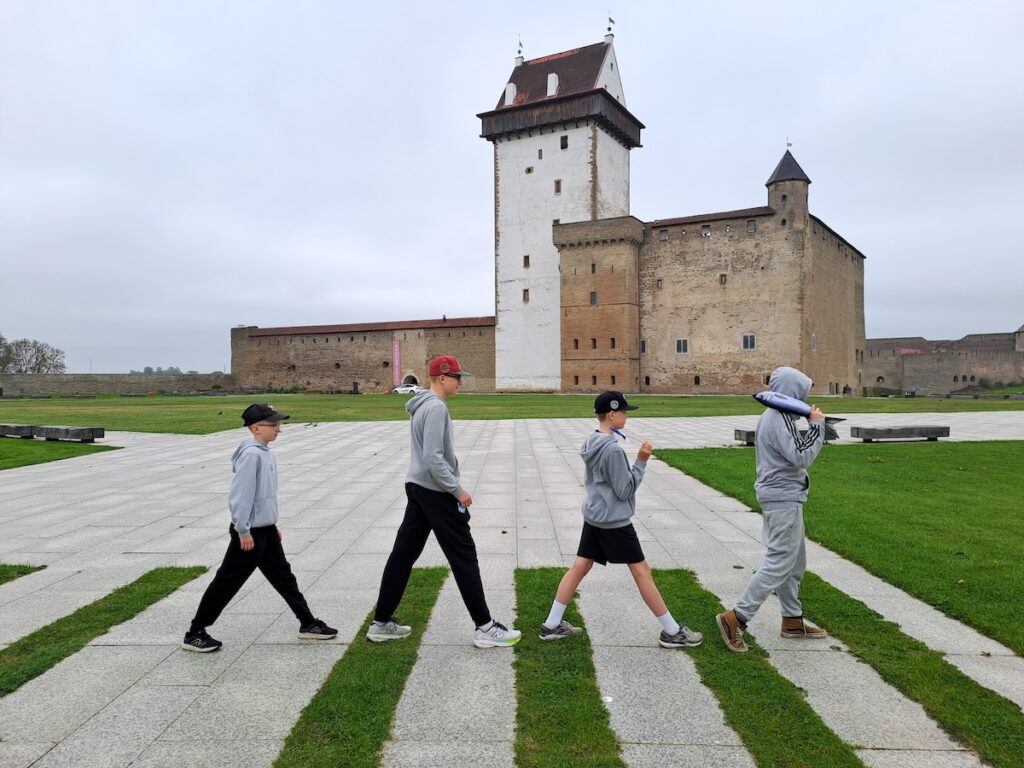 The paving in the courtyard of Hermann Castle in Narva looked to the boys from Forssa Akvarelli School like the legendary Abbey Road.
What would a school trip be like where pupils descend into an underground mine, try their hand at medieval knightly skills in a real castle, explore the wonders of a science centre and, at the end of the day, splash around in spa pools? All of this is possible when a school trip heads to Estonia.
Estonia is known among young people primarily for Tallinn, but for schoolchildren the country is often otherwise unfamiliar. That is precisely why more and more teachers and school-trip organisers see it as an excellent opportunity to combine children’s learning and experiences with strengthening the class spirit. A school trip to Estonia provides a wonderful conclusion to primary or secondary school studies and stays in children’s memories for the rest of their lives.
Juha Alhainen, a class teacher at Forssa Akvarelli School, has taken his pupils on school trips to Estonia four times already. During his long teaching career, he has also organised school trips in Finland and Åland, but Estonia has become his favourite destination.
“Most often, after sixth grade the class composition changes, and a school trip is a great way to bring the shared journey to a high point. Estonia offers an easily accessible experience abroad, and with the budget available, we have been able to get more content than at many domestic destinations,” Alhainen says. “In addition, a school trip may be the first real trip abroad for many children,” he continues.
Klarika Sander-Komulainen, an entrepreneur at Leirikouluvirossa.com, which organises school trips, has made the same observation.
“The feedback from schools has been very clear: a school trip in Estonia offers a lot of content, diverse experiences, and different activities in relation to the available budget,” she says.
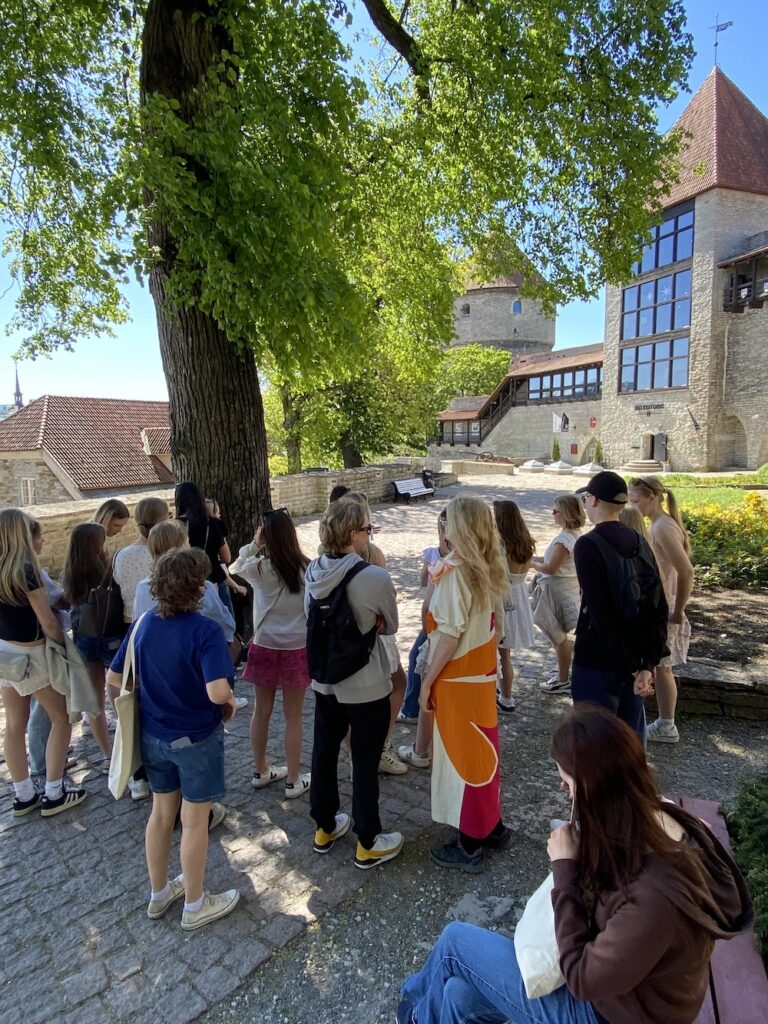
Tallinn is only the beginning
Many young people have visited Tallinn, but few know much about the rest of Estonia. Both Alhainen and Sander-Komulainen consider this one of Estonia’s greatest strengths as a school-trip destination.
“It is important to remember that Estonia is not Tallinn. That is precisely why a school trip offers a great opportunity to see how diverse a country our neighbour is,” Sander-Komulainen points out.
There are plenty of options. In eastern Estonia, pupils can visit Narva Castle right on the external border of the European Union, descend underground at the Kohtla-Nõmme Mining Museum, or spend an active day at Kiviõli Adventure Park. In the Tartu region, attractions include the AHHAA Science Centre, the charming Old Town, and a variety of cultural destinations. Saaremaa, meanwhile, offers medieval history, windmills, and even a meteorite crater.
“I would still like to take a class to Saaremaa. I can think of all kinds of things to see and experience there,” Alhainen says.
Pärnu and Haapsalu are also popular destinations, particularly for two or three-day school trips.
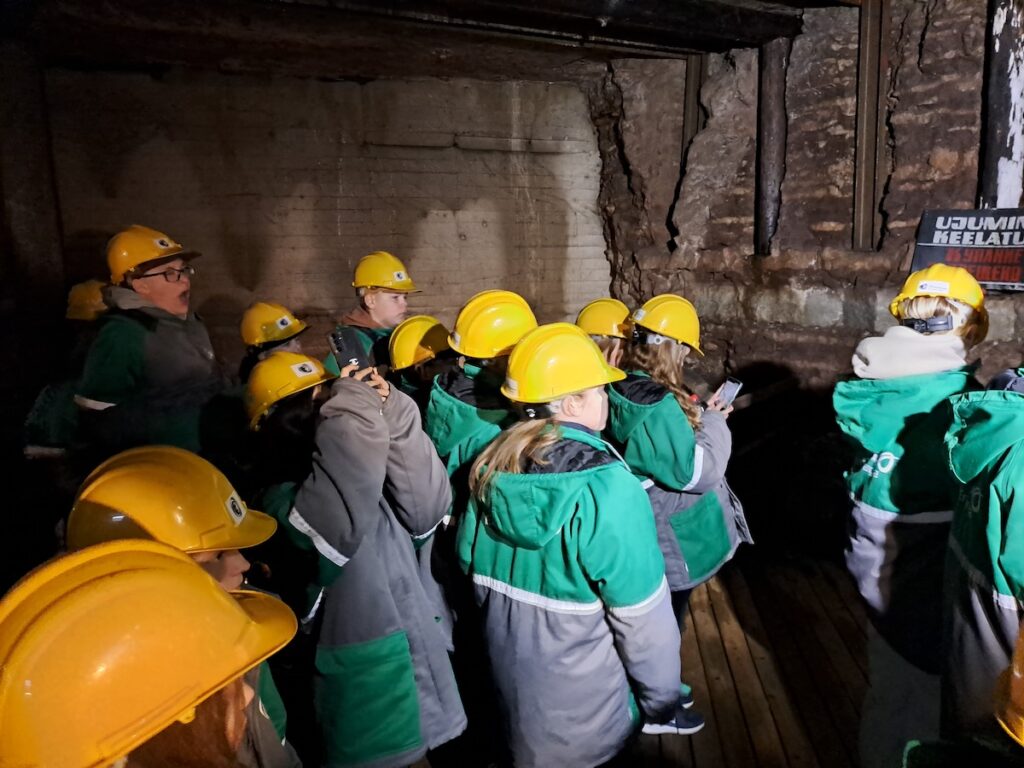
Learning without a classroom
Although a school trip involves plenty of fun, its significance goes much deeper. On a school trip, history becomes tangible when pupils stand on the walls of a medieval castle. Social studies lessons gain a new dimension in Narva, where pupils are literally standing at the edge of the EU, while natural sciences can be learned by trying things out for themselves in science centres, nature parks and museums.
“Estonian museums are really well designed with school-trip pupils in mind. They have things to do, things to try, and interactive content. I have not really visited a museum in Estonia that would not also interest schoolchildren,” Alhainen says.
According to Sander-Komulainen, the best school trips combine several elements.
“At their best, school trips combine learning, experiences and doing things together in a way that stays in the memory for a long time.”
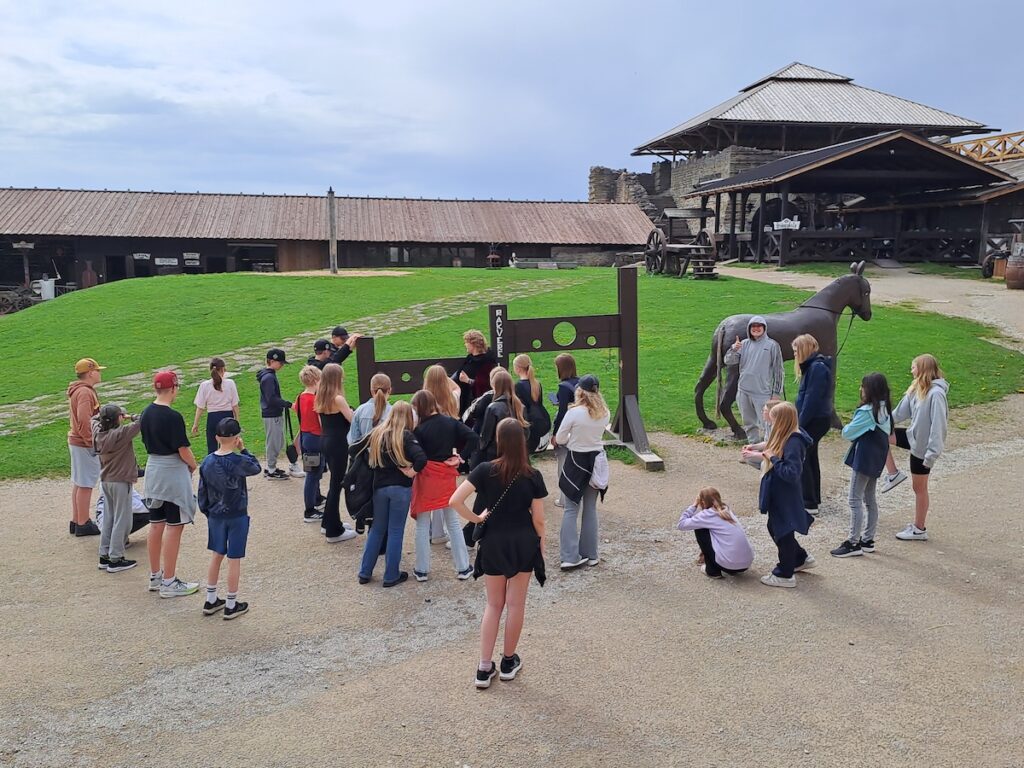
The phone is forgotten when the programme is interesting
Many parents wonder whether phones will distract children from attractions and shared experiences. According to experienced school-trip leaders, the concern is often unnecessary.
“I have seen many times how a good guide or an engaging programme gets the whole group to focus completely on the moment at hand. The phones are forgotten in their pockets by themselves,” Sander-Komulainen says.
Alhainen thinks the same way.
“My school-trip philosophy is to make the programme so varied that there is no time for unnecessary sulking. The pupils have put a lot of work into the school trip, and understand that it is a once-in-a-lifetime experience. When the day contains an appropriate amount of activity, new experiences, and doing things together, social media naturally takes a back seat.”
Close, safe and easily accessible
One of Estonia’s greatest advantages is its proximity. For many children, the ferry journey is already an adventure in itself, while travelling is also easy and safe. Organising a school trip abroad may sound complicated, but in practice it involves the same things as travelling domestically: good planning, schedules and careful preparation in advance.
According to Alhainen, parents are generally positive about a well-prepared school trip.
“The best approach is to make a good plan and present a ready-made package. When the programme, safety, and practical arrangements are in order, parents quickly see what benefits the trip offers the children.”
Meals and special diets can also be handled easily nowadays.
“Estonian partners take special diets seriously, and do their best to ensure that everyone can eat with peace of mind,” Klarika Sander-Komulainen says. Juha Alhainen confirms the same, having stayed with two sixth-grade classes last May at the Tuhamäe Hostel in Kiviõli, eastern Estonia.
“An absolutely perfect place to stay for a school trip,” he says.
Memories that last
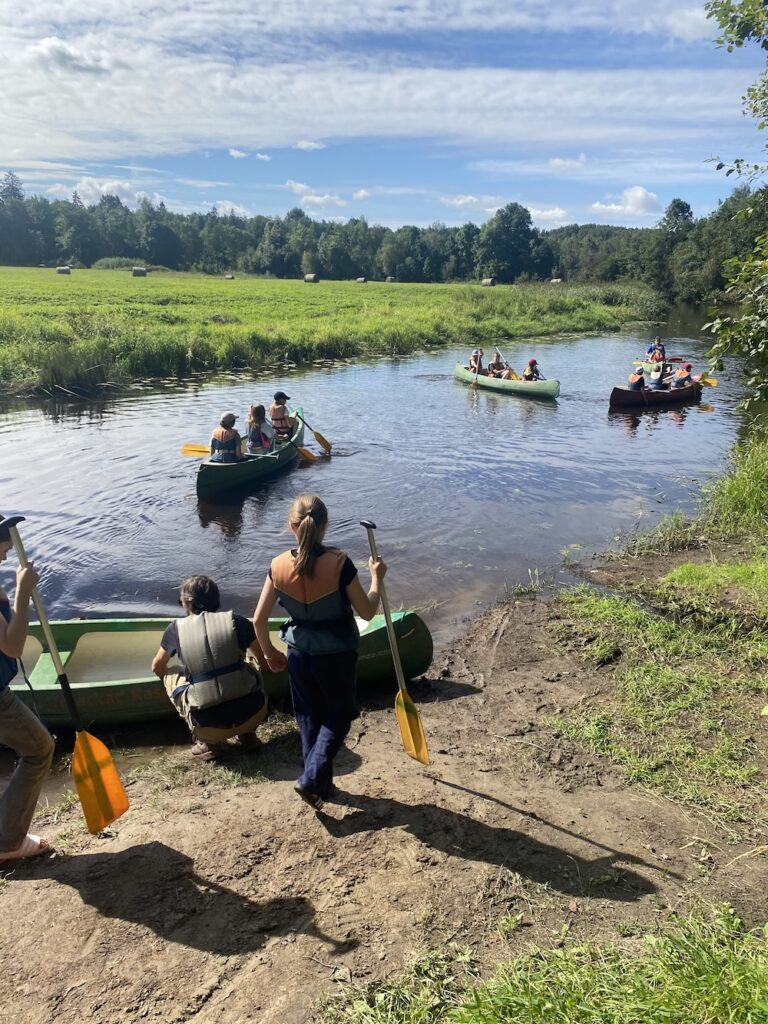
Many of the best moments of a school trip do not happen in museums or at attractions, but through shared experiences. For Alhainen, one particularly memorable experience was a spring river cruise in Tartu.
“The sun was shining from a cloudless sky, and everyone experienced something truly unique.”
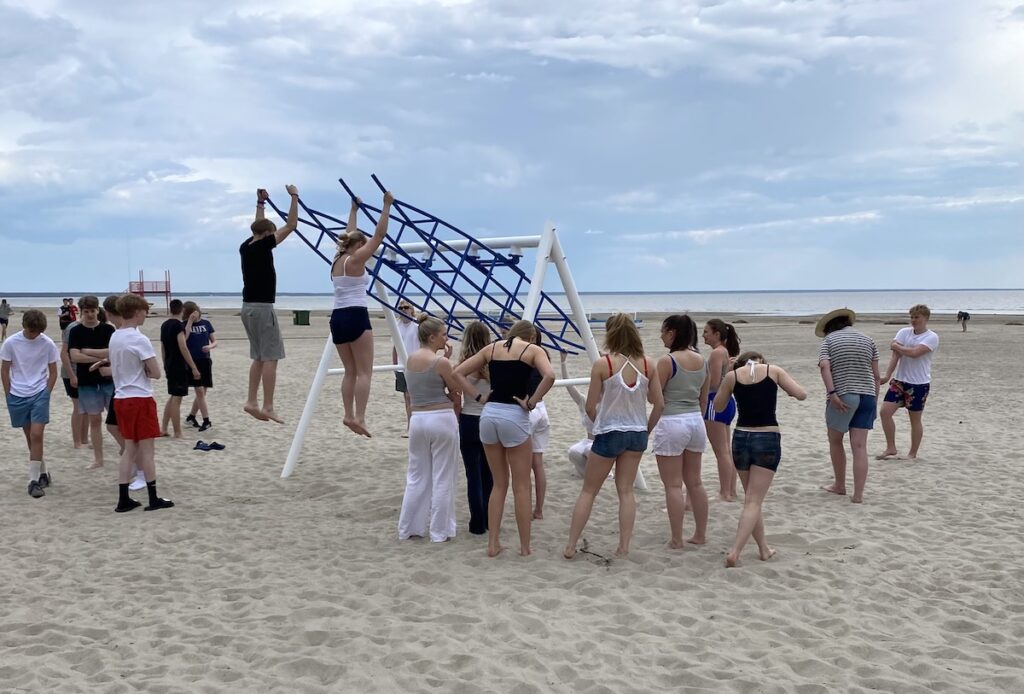
Sander-Komulainen, meanwhile, remembers a moment in Pärnu’s beach park.
“One schoolboy took me by the hand and said, ‘Do you really realise what an amazing country Estonia is? As soon as I turn 18, I’m coming here on my motorbike. I’ll come every summer.’ That was a moment when I had to reach for a handkerchief.”
It is precisely these kinds of experiences that explain why many people return to Estonia again and again.
Klarika and Juha’s TOP 5 tips for organising a successful school trip to Estonia
1. Start planning early
The most popular accommodation, guides, and activities are often booked months in advance. The earlier planning begins, the more options are available.
2. Build variety into the programme
Combine museums, history, physical activity, science centres, nature, and shared free time. That way, there will be something interesting for everyone.
3. Listen to the pupils and keep parents involved
Ask the pupils in advance what interests them, and clearly explain to parents the goals, programme, and practical arrangements of the trip.
4. Take care of practical matters in advance
Passports, permits, insurance, special diets, and accommodation arrangements should be confirmed well in advance of departure.
5. Remember that shared experiences are the most important thing
The best school-trip memories come from encounters, doing things together and discovering new things. A well-planned trip will stay in the pupils’ memories for decades.
To learn more about this and similar topicschildren’s activities Education school trip school trip to Estonia Tourism visiting Estonia