Tartu’s City Centre Is Being Renewed—Little by Little
Text Timo Raussi

Photos City of Tartu / 3+1 arhitektid
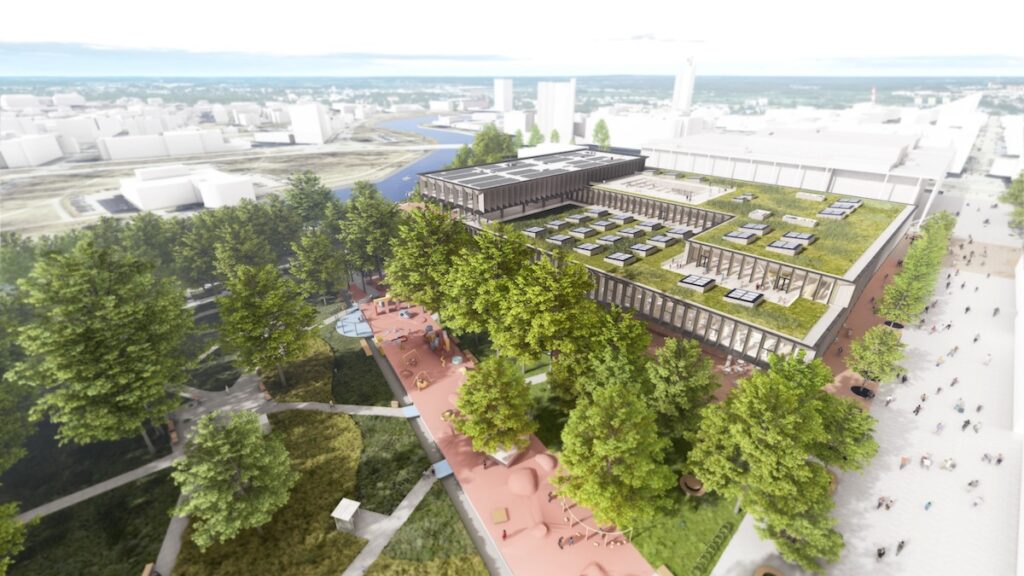 Siuru Cultural Center, with Küüni pedestrian street on the right. A panoramic restaurant will be located on the top floor facing the river.
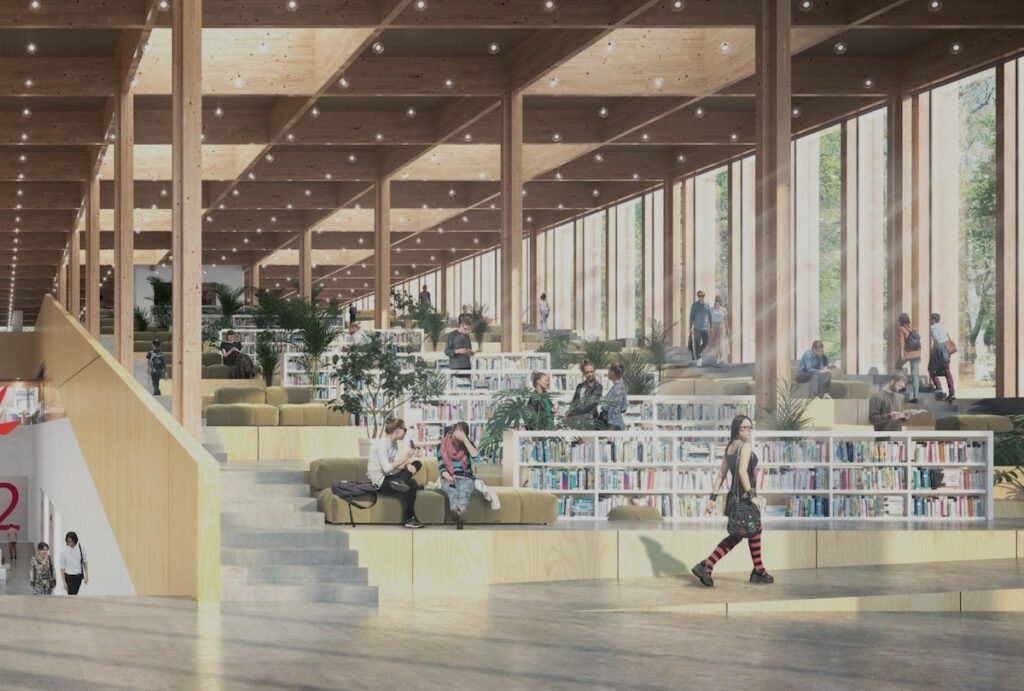
Last summer, we reported on the approval of the detailed plan for the large Siuru Cultural Centre to be built in Central Park between the Kaubamaja shopping centre and the Old Town in Tartu. The modern Siuru will house new premises for the Tartu Art Museum and the city library, three halls of varying sizes for concerts, exhibitions and events, two cinema auditoriums, a bookshop, two larger café–restaurants, and a wide range of hobby, group work and studio spaces connected to the library.
The current four-lane Vabaduse puiestee road, which runs between Siuru and the riverside pedestrian and cycling path along the Emajõgi River, will be narrowed and calmed to a two-lane, courtyard-style street section near the cultural centre. This area could even host various outdoor and urban events with performance stages. Direct pedestrian connections will be created on both sides of Siuru from Küüni pedestrian street to the riverbank, where new docks for river cruise boats will also be built.
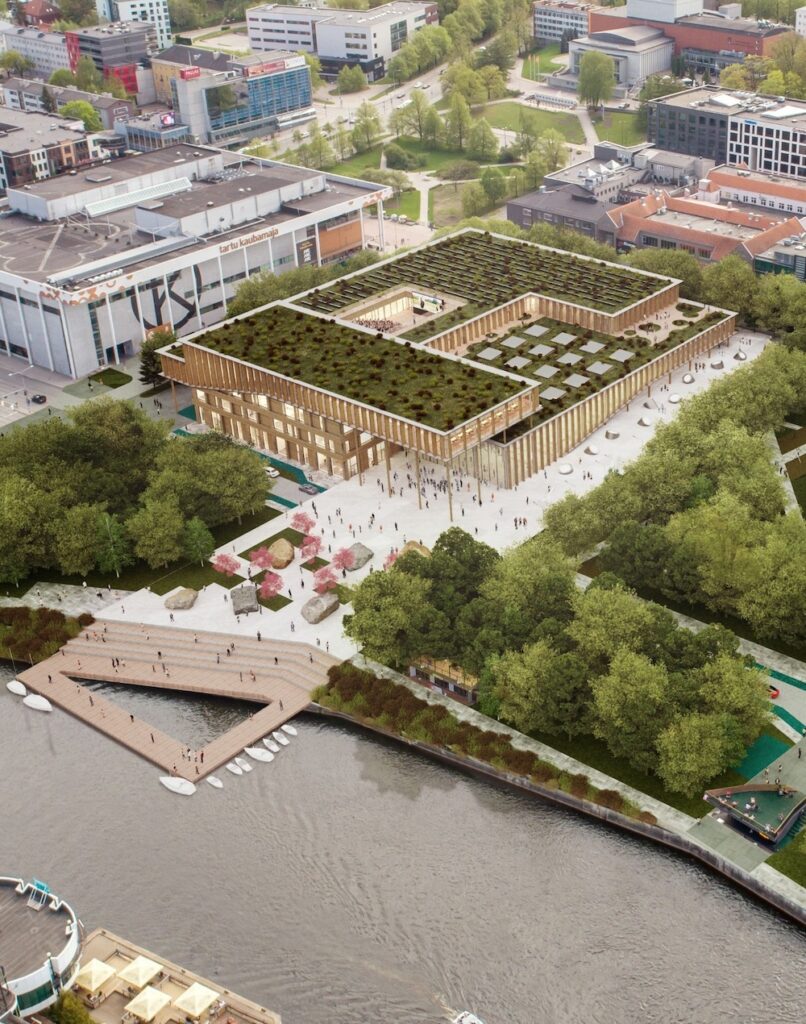
Central Park along Küüni Street has long featured a playground with climbing frames and carousels, much to the delight of families. The park will not disappear entirely under Siuru; about half of it will remain as green space, where a new playground will also be built after construction is completed. However, during the approximately one-and-a-half-year archaeological investigations and the subsequent couple of years of construction work, the City of Tartu will relocate the playground to a nearby block park between Kaubamaja and the Vanemuine Theatre.
Why the delay—the excavations?
Tartu, historically known as Dorpat, is an ancient city. Human settlement in the area dates back long before the founding of the university in 1632, the conquest of the fortress town in 1224, and even before the first written records in 1030. It is known that an ancient hill fort stood on the site of the present-day Tartu Observatory as early as around the year 700, so the layers of soil on the Siuru site may contain a wide range of archaeological finds. Preliminary studies have already confirmed this—after all, Tartu and the Emajõgi River flowing through it formed an important medieval trade route between the Hanseatic cities of Western Europe and Novgorod in the east.
Tartu’s history also includes a massive fire which, in the summer of 1775, just two days after Midsummer celebrations, destroyed two-thirds of what was then a predominantly wooden city within a matter of hours. A total of 290 residential buildings and shops were consumed by flames, along with two bridges and the town hall building, which had been erected in wood on Town Hall Square in 1730. An exhibition on the topic is located in a rather unusual yet logical place—the basement of the Estonian Sports and Olympic Museum on Rüütli Street. According to historical records, the fire is believed to have started just behind the museum building, most likely in a distillery kitchen of the time.
For more information, images and updates about Siuru, the City of Tartu has created an Estonian-language thematic website, which you can explore here. But what cultural or family holiday attractions and activities does Tartu already offer visitors before Siuru is completed? You can find the latest articles and news about the city from The Baltic Guide here.
To learn more about this and similar topicsArt Museum Cultural Centre Emajõgi Siuru sports museum Tartu