How to Become an Estonian
Text Stewart Johnson
Photo Andrei Chertkov
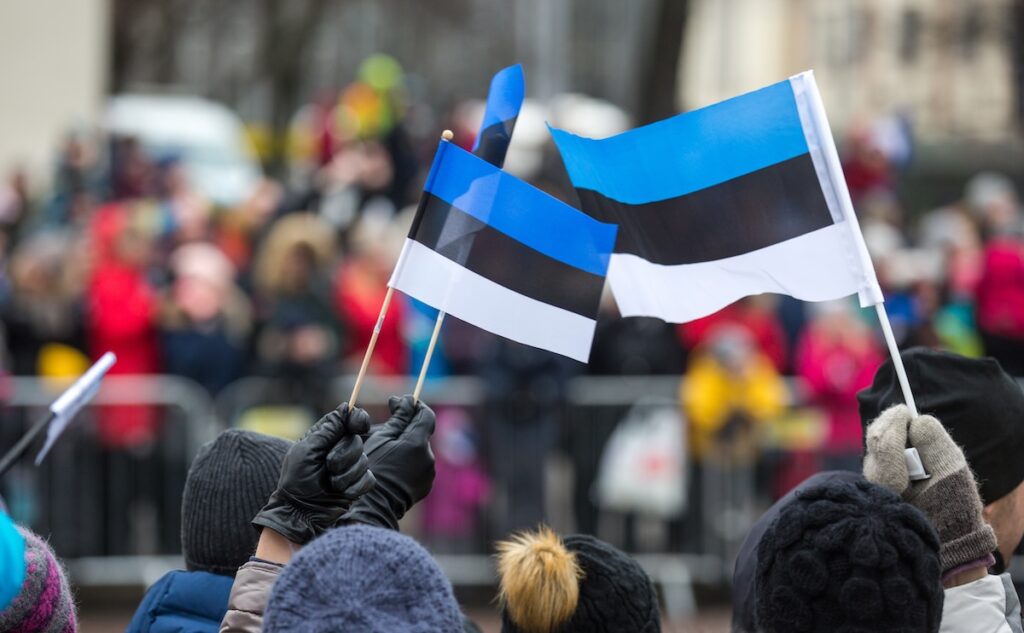
Stereotypes exist for a reason, and after 27 years in Estonia, I have decided to become Estonian. This is a list of some of the stereotypes I will have to learn, and unlearn, to be successful in my quest of intentionally self-Estonianizing myself.
Both of my grandmothers had red hair, so it should come as no surprise that I, too, was born with red hair. Around the age of five years old, my hair color transformed into blond, and a few years later it changed again to brown, and finally black. At my current age, it is undergoing yet another transformation, becoming grey. To become fully Estonian, however, I will have to start dyeing my hair. After I learned the language, I understood that the Estonian word for the colors red, blond, brown, black, and gray are all pronounced “kartul”.
Small talk or big talk?
I will have to unlearn the concept of “small talk” as well. Estonianness only allows for the concept of “big talk”, meaning that you can only speak if it’s extremely important. So instead of looking up at the sky during a conversation and saying, “Nice weather today, don’t you think?”, I will instead only be allowed to comment on what’s in the sky with important phrases such as, “Is that an international drone?”
This reminds me of my favorite joke about Finns and Estonians that I just wrote. An American walks into a bar, and orders a beer. A Finn walks into the same bar, and orders a salmiakki. An Estonian walks into that same bar, and quietly waits half an hour for the bartender to notice him.
What do you think about…?
I’ve lived in Estonia for a very long time, and so it should come as no surprise that I have also travelled with Estonians to several other countries. When traveling to the United States with an Estonian, when the locals found out where my travel companion was from, they always asked two questions. The first was, “Where is Estonia?” To which I would matter-of-factly reply, “It’s right next to Latvia.” Then the inevitable second question, “How do you like America?” My Estonian friend would reply, “It’s normal.”
Then when traveling to France, the French would ask my Estonian friend, “How do you like French food?” In Sweden, they would ask, “How do you like Sweden?” Or “How do you like Finland?” “How do you like Spain?” But when I was the foreign visitor in Estonia, they would ask me, “How do you like Estonians?” So I must learn to constantly seek approval.*
*Yes, I know this one is potentially rather offensive to Estonians, but…it’s always been my experience. PS—I’m becoming Estonian for a reason!
Estonian politics
Estonia is a country full of programmers. They teach it in many kindergartens, and a substantial portion of the population works in that field, as well. This means it was easy for me, as an American, to come to Estonia. Why? Because politics in my birth country is strictly binary. Republicans and Democrats, or Demoblicans and Republicrats, there is only one or the other, and both are equally useless. In Estonia however, there is a whole variety of useless political parties. It means that being politically dissatisfied is much more satisfying due to the colorful political diversity that exists here. Every party is equally talented at raising the cost of living, and then increasing taxes on top of everything else. My grandmothers used to say that politics was like leaves on a tree: sure, they might change colors and become yellow or red, but they’ll always end up falling and being thrown in the trash.**
**Yes, I know this one is potentially rather offensive to Estonians, but…it’s always been my experience. PS—I’m becoming Estonian for a reason!
Understanding other stereotypes
Perhaps the most difficult part about becoming Estonian will be having to accept some beliefs that I otherwise would never even consider. For example the concept that all ailments can be treated by dousing your socks in vodka, and then wearing them on your feet. I would assume that if a Finn did this, his socks would stink of salmiakki.
I will no longer be able to shake hands when visiting a friend at the moment he opens the door. I will have to wait until I have crossed over the threshold of the door, and am firmly inside his home to shake his hand. Or at the dinner table, I will have to learn how to ignore the last piece of food on the serving plate, to pretend it doesn’t exist, so that the last bite is wasted, even though I was always taught that people were starving in China.
Or Latvians. I will have to accept the common knowledge that all Latvians have six toes. And I will no longer be allowed to ask what happened to the other four toes. When males are born in the US, they usually have a medical procedure called “circumcision” performed. I’ve always wondered if Latvians have something similar…
Belief in terra firma
Growing up in the United States, I was forcibly exposed to all manner of strange belief systems, such as mythologies that involved the dead rising. To become Estonian, however, I will have to accept that while Estonians are one of the most atheistic peoples on the planet, many do actually have a complex belief system called “maa usk”, which translates indirectly as “belief in the ground”. I will have to accept that the ground exists. This is not entirely unlike the Flat Earth Theory, which is quite understandable to Estonians, until they travel to a country that actually has hills, or even mountains. No matter what you show them, however, they will always believe that the ground exists.
If I can welcome these beliefs, practices, and behaviors into my heart, then I will know that I have successfully, and intentionally, self-Estonianized myself.
To learn more about this and similar topicsAmericans citizenship coming to Estonia Estonian Culture Estonians stereotypes


![Estonia: Powered by Song [Review]](https://balticguide.ee/wp-content/uploads/2015/06/Helen-4-620x310.jpg)