Naissaar—An Island of War, Plague, and Anarchism
Photos Toolbox Estonia / Madis Rallmann, Mikko Virta
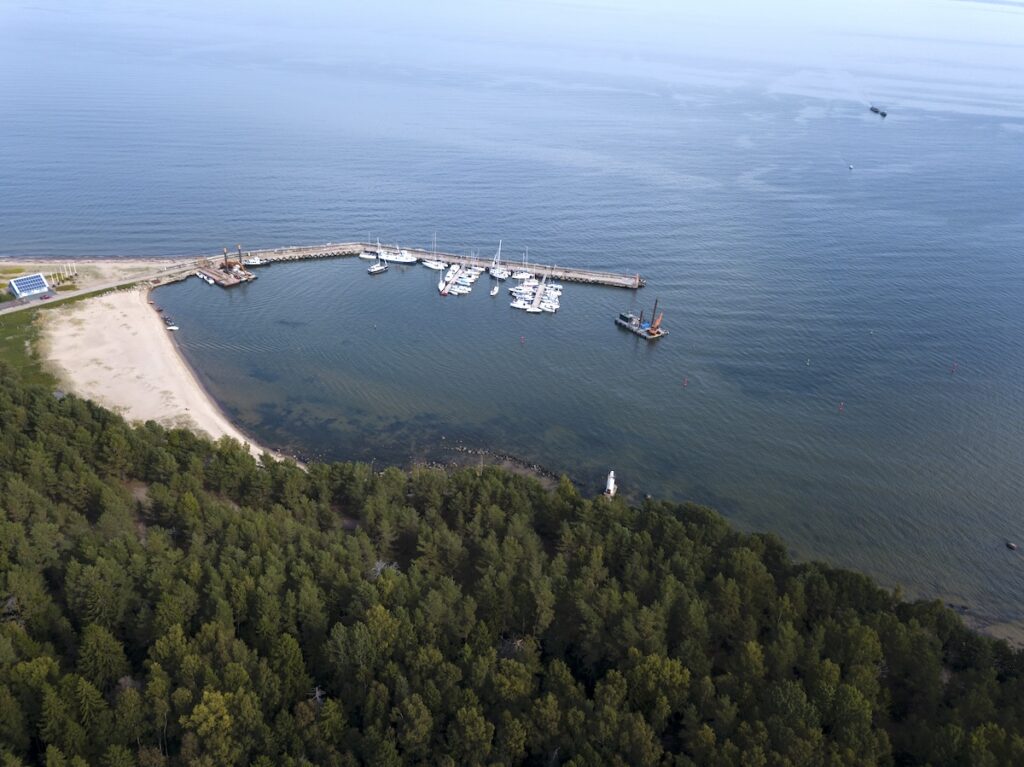 Estonia’s Naissaar Island is located off the coast of Tallinn, about ten kilometers from the mainland. Ferries operate to the island from May to September.

Ville Hytönen, writer and chair of the Finnish Writers Union,
living in Suurupi, Harku, Estonia.
Three Russian MiG-31 fighter jets violated Estonian airspace in September 2025. According to media reports, they flew as far as Naissaar. Many people recognise the island’s name—some may have even visited it, while others have simply gazed at it through the window of a car ferry.
Now it lies before me. I watch Naissaar in the early evening from my village shore, feeling a touch of melancholy. The narrow strait between our village and the island has often set my imagination racing. I’ve wondered how, during the last war, people might have rowed across here—perhaps to fetch food for the island, or to carry over lamp oil and petrol.
Naissaar is indeed well acquainted with military affairs. Estonia’s sixth-largest island is best known for its role in the Gulf of Finland’s artillery barrier plans. Between the two world wars, Finland and Estonia devised a coastal defence system at the narrowest point of the gulf: overlapping fields of fire from coastal guns, armoured ships, submarines, and sea mines—anything that might stop Soviet warships from moving freely.
The plan was based on Peter the Great’s old naval fortress, built some twenty years earlier. From that era, both my home village and Naissaar still bear artillery platforms and fire control towers.
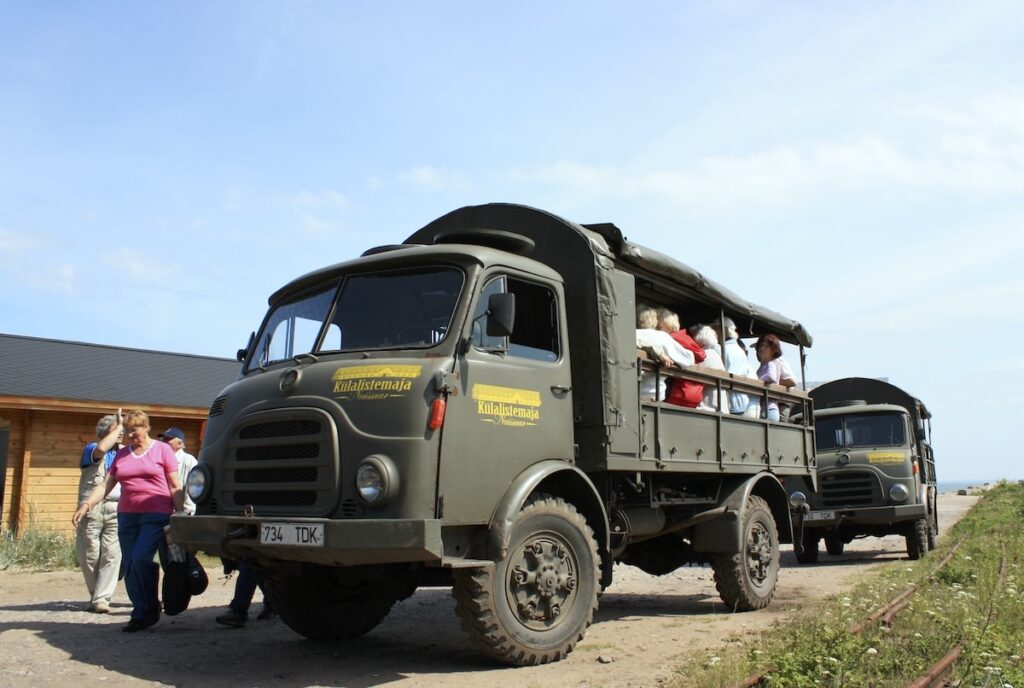
From one of my own visits to Naissaar, I remember the narrow-gauge railway. It remained in use until 1994 for transporting heavy Soviet military supplies. But when the occupying army finally withdrew from Estonia, the old trains were left behind. A lucky tourist might still get the chance to sit inside the TU6A-1930 diesel locomotive.
Yet Naissaar’s history is far stranger than railways or coastal defences.
The forested island was mentioned by the chronicler Adam of Bremen in the High Middle Ages as Terra Feminarum—the Land of Women. The bold explorer wrote that the island’s warlike women conceived their children by drinking water, raised their daughters as warriors, and sold their sons into slavery. The truth, however, is likely more mundane: the men were away fishing or seal hunting, and the German visitors failed to understand why the island seemed to hold only women.
Another story of the island’s name tells that in 1710, the plague spreading from Tallinn reached Naissaar, killing all its inhabitants except for one old woman.
Every tale about Naissaar seems tinged with mystery—confusing, haunting, and a little like a fairy tale.
The strangest events in Naissaar’s history took place between 1917 and 1918. Few people know that at the very same time Finland and Estonia were declaring their independence, this small island also proclaimed its own. For a few months, it bore the grand name The Soviet Republic of Soldiers and Fortress Builders of Naissaar.
The executive and ruling power consisted of fewer than a hundred naval soldiers inspired by anarchism, led by a Ukrainian-born man named Stepan Petrichenko. They formed their own government and began collecting taxes from the island’s couple of hundred residents—people who wisely decided it was safer to pay up and accept the new anarchist order.
A flag bearing a skull was raised on the fortress mast, emblazoned with the words “Death to the Bourgeoisie!” Beneath the skull were a crossed spear and sickle, and below those, a pair of crossed shinbones.
At the time, the Estonian government—still in the process of establishing independence—asked the German army for help. German forces occupied Naissaar just two days after Estonia’s official declaration of independence. The anarchist sailors fled to Kronstadt, where, a few years later, they launched a new uprising against the Bolsheviks. Those who were captured were executed in Tallinn, and the island was formally incorporated into Estonia.
So—wars, warlike self-fertilising women, plague, railways, and anarchism. Yet from the mainland, the island looks peaceful. As evening falls, the beam from its lighthouse becomes visible, and a massive Swedish ferry passes through the strait, glowing in full light.
I wouldn’t be a poet if I didn’t find something strangely beautiful in all that history. Someday, or some night, I’ll row across this strait myself—hopefully not during wartime, and without cans of petrol and lamp oil in the boat.
To learn more about this and similar topics