Equipment That Can Withstand Even the Roughest Knightly Games
Text Timo Raussi

Photos Saaremaa Museum / Rita Rahu
If you find Estonia’s historic fortresses to be rather dull museum attractions—stone structures of walls and loopholes without engaging content—we won’t stop you from holding on to that preconception. However, we would point out that there are remarkable differences in museum exhibits, exhibitions, and activities that encourage visitor participation.
A positive example is the staff at Rakvere Castle. Their immersion in the roles of medieval soldiers, castle stewards, and tavern maids, combined with their eloquence in conveying historical knowledge in an engaging way, rivals that of many professional actors in city theatres. And the cunning way they wrap visitors around their little finger and get them to try medieval tournament skills is irresistible, and sometimes with humorous consequences.
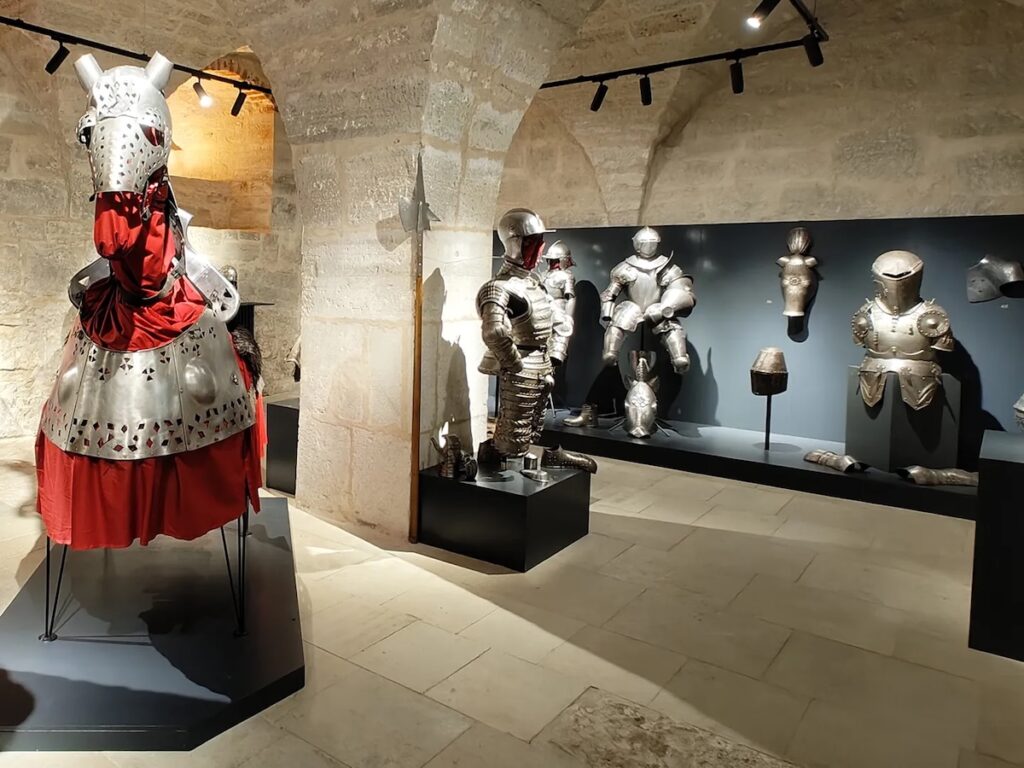
In terms of news value, the exhibition “When Men Were Made of Iron”, opened at the end of January at Kuressaare Episcopal Castle and running until 29 November, may already have lost its most immediate headline appeal. However, its exhibits, and the person behind this armour and weapons exhibition, are definitely worth highlighting.
The Polish craftsman blacksmith Sergey August has been interested in the history of knightly orders and the heroes of the era all his life. This passion grew into a professional calling in 2004, since when he has been producing armour and weapons using traditional methods: a forge, hammers, and engraving tools. He has even had to make some of his own tools based on museum artefacts and historical drawings.
As a result of this long-term work, August’s collection now consists of 80 full suits of armour, and 95 other items. These include knightly armour from the 15th to 17th centuries, soldiers’ battle and ceremonial helmets, and even complete horse armour. The items are crafted with such precision that, in addition to their authentic visual aesthetics, the details are also fully functional. Unlike many modern replicas, August’s creations can withstand the impact of real combat blows while still ensuring the wearer’s mobility.
August’s contribution to the authentic presentation of history has been recognised across Europe. Before Kuressaare, his collection or parts of it have been exhibited in several respected museums in Poland and Germany, at the castle of the 14th-century Polish king Casimir III the Great in Niepołomice in southern Poland, and last year in Estonia at the visitor centre of Vastseliina Episcopal Castle. A selection of medieval shame and punishment masks forged by August is still on display there.
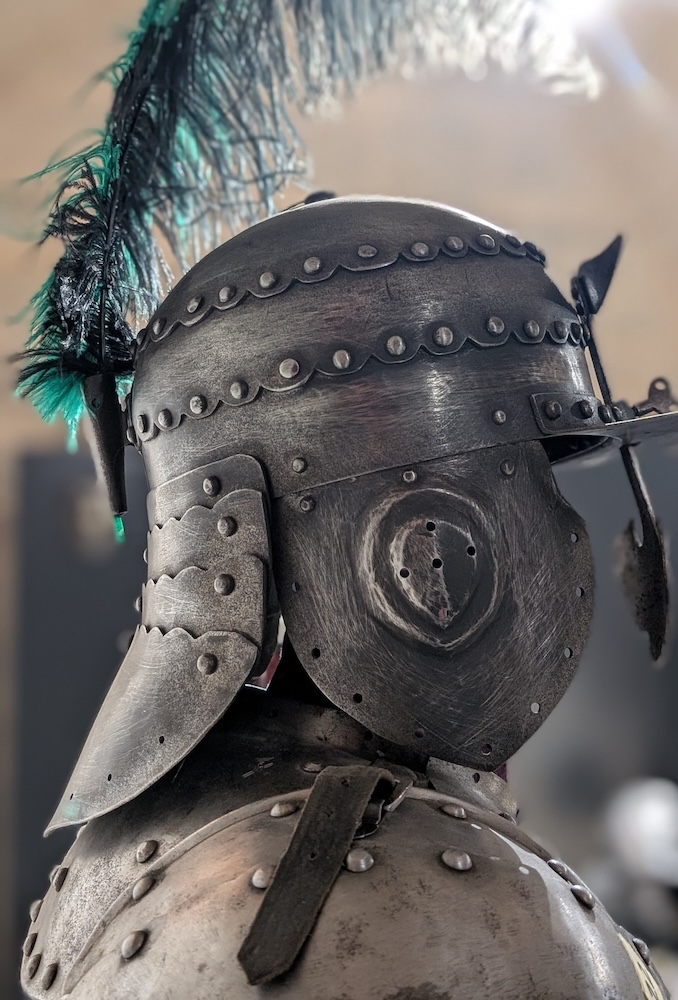
The exhibition “When Men Were Made of Iron”, or in Estonian “Kui mehed olid rauast”, is on display in the hall of the north-eastern wing of Kuressaare Castle until 14 May from Wednesday to Sunday, 11:00–18:00, and thereafter during the summer season until mid-September every day, 10:00–18:00. Admission to both the exhibition and the entire Episcopal Castle costs €13 for adults, €10 for students and pensioners, and €29 for a family ticket, for two adults and children. Holders of the Estonian Museum Card and children under 9 enter free of charge.
What else to see and do in Kuressaare – read here, and please note that the dates for summer events are based on last year’s calendar).
To learn more about this and similar topicsarmour Episcopal Castle events Kuressaare Medieval Saaremaa