Naksing in the Corner Was Marras
Text Antti Sarasmo

Photo The Baltic Guide archive/Hannu Lukkarinen
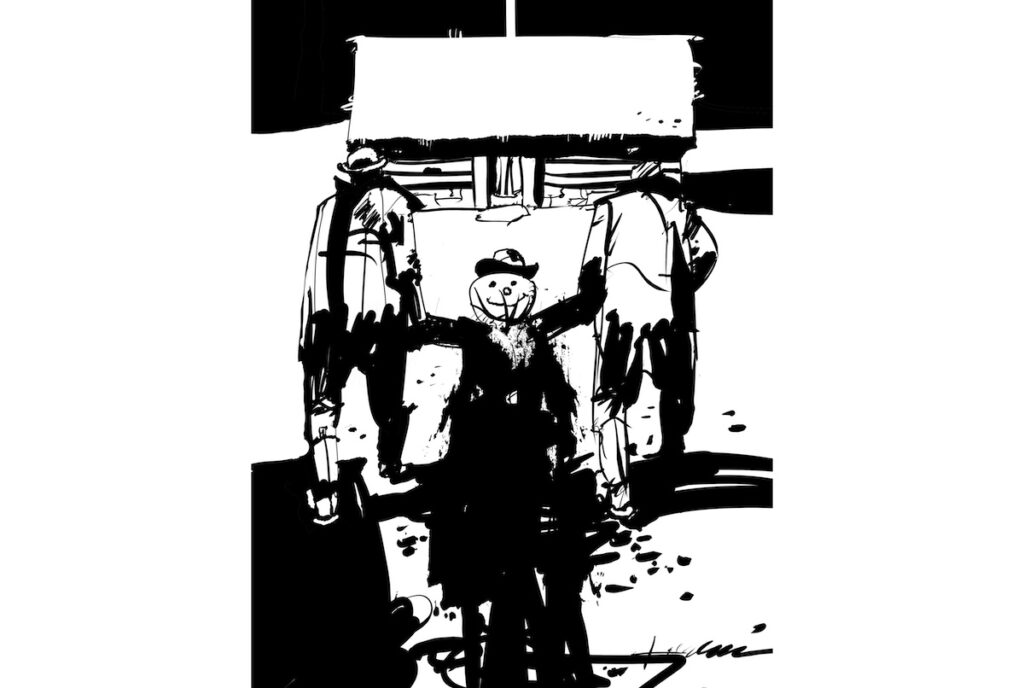
There are differences between Estonian and Finnish folklore, but also much in common. Werewolves ran through the forests of Estonia, and the dead swung in Christmas mobiles on Christmas night.
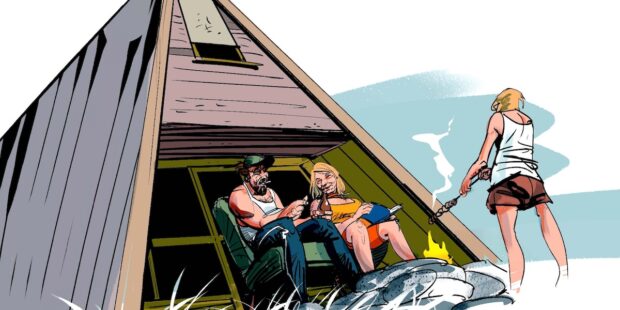
Marras was the messenger of death. When Marras’s clicking was heard in the dimness of a smokehouse, it was known that someone in the household would die in the near future. Usually Marras clicked in the spinning corner: that is, the cleanest corner of the smokehouse where spinning was done. To avoid greater misfortune, there always had to be something to spin on the wheel. Then Marras would not become angry; it merely brought the message.
In Finland, November is the month between autumn and winter. At that time everything in nature is dead. Because the Germans gave names to the months in Estonia, the Estonian name for November is november.
The Energetic Dead
The greatest difference between Estonian and Finnish folklore is the behaviour of the dead. In Finland, the dead behaved properly and haunted only in special cases. It was different in Estonia, where the dead constantly wandered among the living.
In autumn, from the Monday after Michaelmas until All Saints’ Day, there was a proper holiday season for the dead. According to the more Christian understanding, the Archangel Michael released souls from heaven for home leave, while according to the more pagan understanding, souls simply left the underworld without needing any permission.
Late autumn in Estonia is a rainy and foggy time. Livestock had already been brought home from pasture, major outdoor work had been completed, and people mainly worked around the farmyard or in the village. It was easy to imagine all kinds of things in the dark, wet, foggy forest. People spoke of the time of the souls of the dead, or hingede aeg.
In Finland, rural settlement kept expanding as new farms were established in Crown forests. The Crown favoured the founding of new farms because a functioning farm paid taxes. In Estonia, the situation was different. Land and forests belonged to manors, and manors needed agricultural labour.
A village did not need to be large, since a larger village offered no benefit to the manor. Estonians therefore lived in villages, and the same family could have lived in the same village, even in the same house, for many generations. It was easier to regard previous generations as part of the same family when people were still living in houses built by those earlier generations.
The dead, or ancestors, were respected. Christmas was also a day of home leave for the dead. After the household had finished bathing, water was left ready in the Christmas sauna and steam was thrown onto the stones. The souls of the ancestors could then bathe there. In the farmhouse, people slept on straw on the floor so that the dead could use their beds, and food was left on the table for them to taste.
Estonian peasant culture included the village swing hill, a social gathering place. At Christmas, a straw mobile hung in front of the window, serving as a swing for the souls. On Christmas night it fulfilled the same purpose; the dead could swing there and perhaps reminisce about courting on the village swing hill in the twilight of a summer evening.
Not all of these “home visitors” were harmonious and well-mannered. Some were what we would call ghosts. The most troublesome were those who had died elsewhere. A person’s soul found peace when they died properly at home in their own bed.
If someone died in the forest or drowned in a river, for example, they became a troublesome ghost. The ghost harassed the household, banged and made noise, tormented animals, and in every way showed its dissatisfaction. The ghost calmed down only after its earthly body had been found and buried in the churchyard.
Another troublesome group among the home visitors were wicked people. Some malicious individuals refused to behave properly even after death. Out of sheer spite, these ghosts tormented the people of their former home, sometimes even neighbours, and caused much harm.
In such cases, the village would determine who the malicious ghost had been, and the ghost’s family would go to the cemetery. The grave was opened and the deceased turned onto their stomach. A person buried face down received no leave at all and remained a prisoner of their grave for eternity.
Werewolves Lived in the Forests
Neighbouring peoples regarded Estonia as the land of werewolves, and according to them the forests positively teemed with them. In Estonia, becoming a werewolf was a personal choice and a deliberate act, not a curse as in English or American folklore.
At its simplest, a person went alone into a cold sauna. They walked counterclockwise around the sauna benches and recited an incantation. To become human again, they returned to the sauna as a wolf, walked clockwise around the benches, and recited the spell. Another method was to put on a wolfskin and recite an incantation. There were many other ways as well, but every transformation into a werewolf involved a spell.
Folklore does not explain what benefit there was in becoming a werewolf, or why it was done so often. A werewolf could mainly tear apart an enemy’s livestock and cause other damage. One advantage, of course, was that real wolves would not attack a werewolf because they believed the werewolf was one of them.
If a villager, in werewolf form, tore apart the livestock and domestic animals of neighbours, such a neighbour had to be captured either in wolf form or human form. Burning at the stake then solved the werewolf problem.
Kratt Wanted Its Master’s Soul
Kratt, also known as the Firetail, is perhaps the most famous mythological creature in Estonia. It belongs to a more recent layer of folklore than pagan times because it involves the Devil. The Devil is a Christian concept, and no equivalent figure appears in pre-Christian Finno-Ugric folklore.
The Devil gave Kratt its spirit and demanded the soul of Kratt’s master as payment. At night, at a crossroads, the Devil would appear when summoned. As security for the requester’s soul, he demanded four drops of blood. Clever Estonians even tricked the Devil himself by giving him four drops of red berry juice or animal blood in the darkness.
Kratt was a kind of doll, somewhat resembling a human or an animal, small in size and made from whatever materials were available. Kratt was built over four weeks, always on Thursday evenings. On the fourth Thursday, a spirit was purchased for it.
Kratt was a thief. A red, glowing, spherical creature with a fiery tail flew through the village in the darkness of night and brought its master whatever was commanded—money, grain, or anything else. No cupboard or iron-bound chest could keep Kratt out. Kratt could also be put to work, for example ploughing, but as a thief it brought wealth more quickly.
If someone was foolish enough not to have deceived the Devil with false blood, the Devil would come to the house in some form on the night after death and carry off the deceased’s soul. This unpleasant fate could still be avoided during one’s lifetime by selling the Kratt. In that case, the soul contract became the new owner’s problem.
Another way to destroy a Kratt was to give it an impossible task. One such task was emptying a lake with a sieve. Kratt would try and try and eventually burn to ashes from excessive effort and frustration.
Churches generally belonged to the manors, and the baron appointed the pastor. The German-origin noble families of Estonia had many relatives in their junior branches without official positions, and so Estonian parishes often had pastors who had come from Germany and spoke only German.
Ordinary people understood very little of the Christian doctrine preached in German, and what people did not understand, they explained through the wisdom of their ancestors. In Estonia, folklore remained very much alive until the nineteenth century.
To learn more about this and similar topicsAntti Sarasmo folklore Kratt Marras Mythology