New Environmental Standards Are Making Plates Dissolve—Literally
Text The Baltic Guide editorial team

Photos Visit Estonia / Anna Markova and the magazine archive
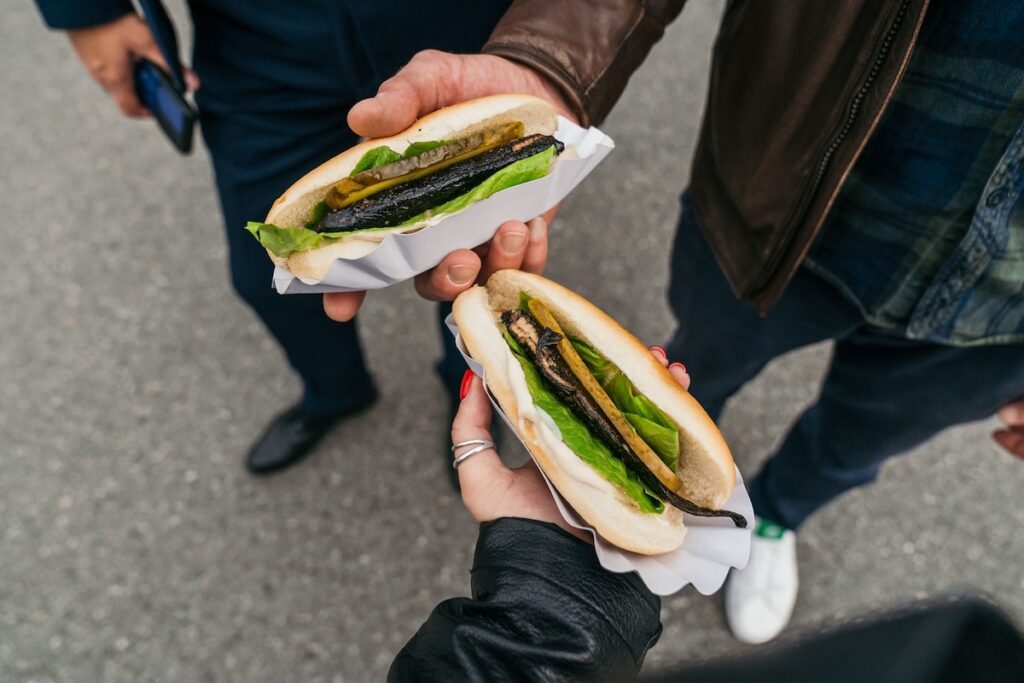 At the Narva-Jõesuu lamprey festivals, these lamprey hot dogs are still sold in the traditional way, as the event day is 26 September.
Green Key is the world’s leading sustainability programme and certification for the tourism industry, established in 1994. To receive it, businesses that pass an audit, such as hotels, campsites, attractions, and restaurants, commit to minimising their environmental impact, and increasing the local socio-economic benefits of their operations, for example by favouring locally sourced food at events held on their premises.
In Estonia, a total of 156 tourism and event sector businesses hold the Green Key certificate. Among them is Paavli Creative Factory in Tallinn, a music and cultural venue popular for live performances. Last year, it became the first of its kind in Europe to receive the Green Key label, and a recent follow-up audit also confirmed that it can retain the certification.
Now, however, Estonia’s tourism sector is facing a new challenge, as Green Key International (GKI), which manages the label globally, is updating its criteria for the five-year period from October 2026 to December 2031. Estonia’s tourism development center, SEI (Stockholm Environment Institute’s Tallinn office), and the Estonian Environment Agency (Keskkonnaagentuur) are beginning training sessions for local tourism entrepreneurs—the first Green Key seminar day taking place on 28 April.
One of the most shocking requirements of the new rules concerns the time limit for the complete biodegradation of food serving containers used at events. For entrepreneurs accustomed to traditional waste management, or those who have only recently adopted deposit-based reusable container systems, as well as for festival and concert visitors, the new rule—30 minutes—sounds absurd.

“Let’s think about Tallinn’s Christmas market next winter. Although GKI seems to limit the rule on its website to solid food containers—mainly plates, not, for example, mulled wine cups—it will still be important to ensure that no ketchup, sauerkraut, or other messy food waste is left on plates that dissolve into cellulose fibers and eventually into water. Few people eat their blood sausage portion so slowly that the plate would literally start dissolving in their hands,” comments Timo Raussi, a tourism expert who worked about five years ago as Finland’s communications manager at Estonia’s tourism development centre and now oversees Finnish-language online and April Fool news for The Baltic Guide.
The new rule on dissolvable plates is not, in itself, an insurmountable requirement. For years, the packaging and food industries have been developing edible packaging and serving materials. In addition, ice cream has long been served in waffle cones, so companies in the sector may simply need to adjust their equipment to produce waffle plates as well. On the other hand, the new Green Key rules allow food to be served in customers’ own reusable containers, so after the beginning of October, promotional posters for Estonian concerts, festivals, and sports events may well feature large messages such as: “Bring your own plate!”
To learn more about this and similar topicscertification environment events Food Green Key Sustainability Tallinn