This Is How Tintinnabuli Was Born 50 Years Ago
Text Timo Raussi

Photo Birgit Püve
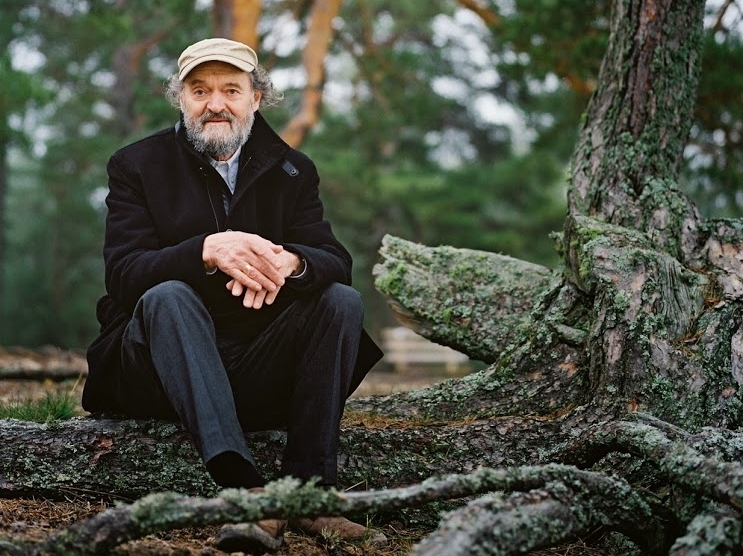
According to composer Arvo Pärt’s spouse Nora Pärt, it was exactly 50 years ago on the morning of Saturday, 7 February when her husband—who was going through an artistically uncertain phase—sat down at the piano and, almost by accident, composed a modest-sounding piano piece titled “Für Alina”. The piece became the first representative of Pärt’s distinctive musical language of expression, later named tintinnabuli.
The tintinnabuli technique, characterised by an aesthetic of reduction and silence, has thus for half a century been the source of the inexhaustible creativity of Pärt, who turned 90 last autumn. According to statistics from the music site Bachtrack, Arvo Pärt rose again in 2025 to become the world’s most performed living classical composer.
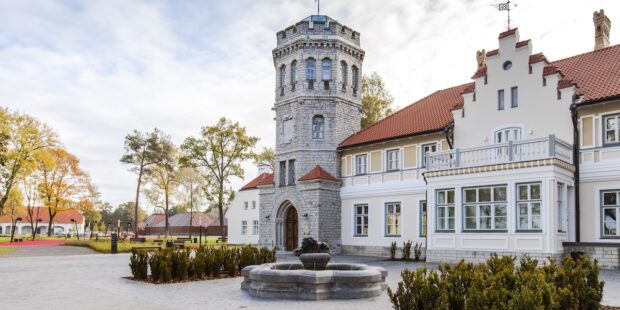
Thirty kilometres west of Tallinn in Laulasmaa, the composer’s current home region, lies the architecturally enchanting Arvo Pärt Centre with its concert and exhibition halls, libraries, observation towers, and cafés. According to Kristina Kõrver, a musicologist and pedagogue working at the centre, Pärt has expanded the understanding of tonal and modal music in the field of music, thereby strongly influencing other creators of contemporary music.
“For Pärt, as he himself has said, the most important thing is that tintinnabuli has become a linguistic means of communication, through which he can express his worldview, his relationship with religious themes, and his search for beauty and truth,” Kõrver explains.
But who was Alina? She was the 18-year old daughter of Irena Veisaitė, a close friend of the Pärt family, and a Lithuanian theatre scholar who had also lived for a while in the Pärts’ city apartment in Tallinn. Irena lost her daughter beyond the Iron Curtain when, due to internal family conflict, Alina moved with her father from the then Soviet Union to England. Of Jewish descent, Irena had already lost her mother earlier during the turmoil of the Second World War and the Holocaust, and was therefore devastated with grief. Arvo Pärt dedicated his work as a gesture of comfort, using it to convey the eternal love and connection between mother and daughter on the one hand, and between his own family and Irena on the other.
Next summer, the Arvo Pärt Centre will open a special exhibition dedicated to the theme. It will present manuscript scores of “Für Alina” brought out from the archives, numerous arrangements of the piece, interpretations inspired by the composition across various art forms, a documentary film, and the stories of the key people associated with the composition.
To learn more about this and similar topicsArvo Pärt Arvo Pärt Centre Bachtrack Culture Für Alina music Tintinnabuli