Lahemaa Tourism Developers Honoured at ITB Fair
Text Timo Raussi
Photos Visit Lahemaa and Visit Estonia / Madis Railmaa
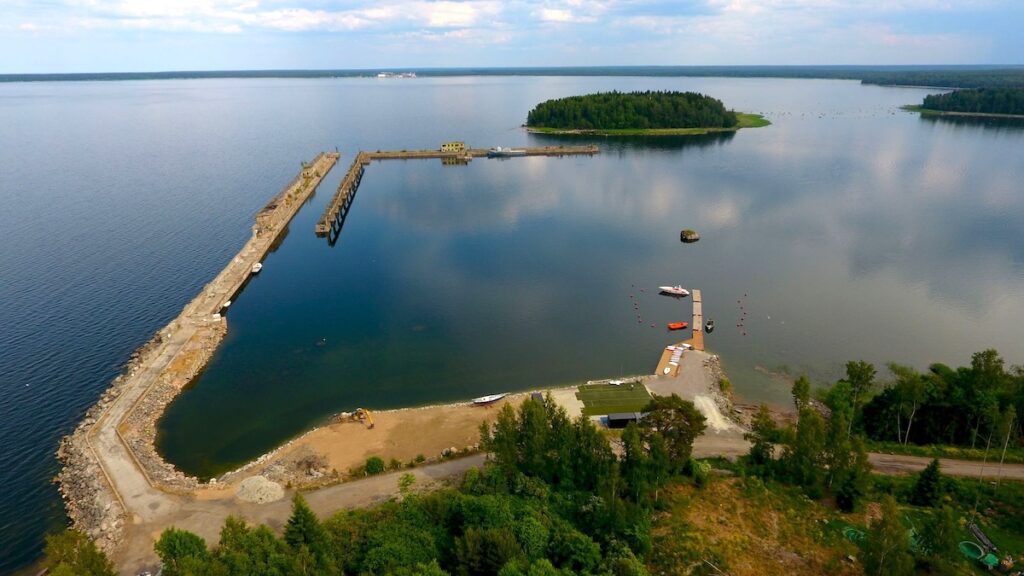
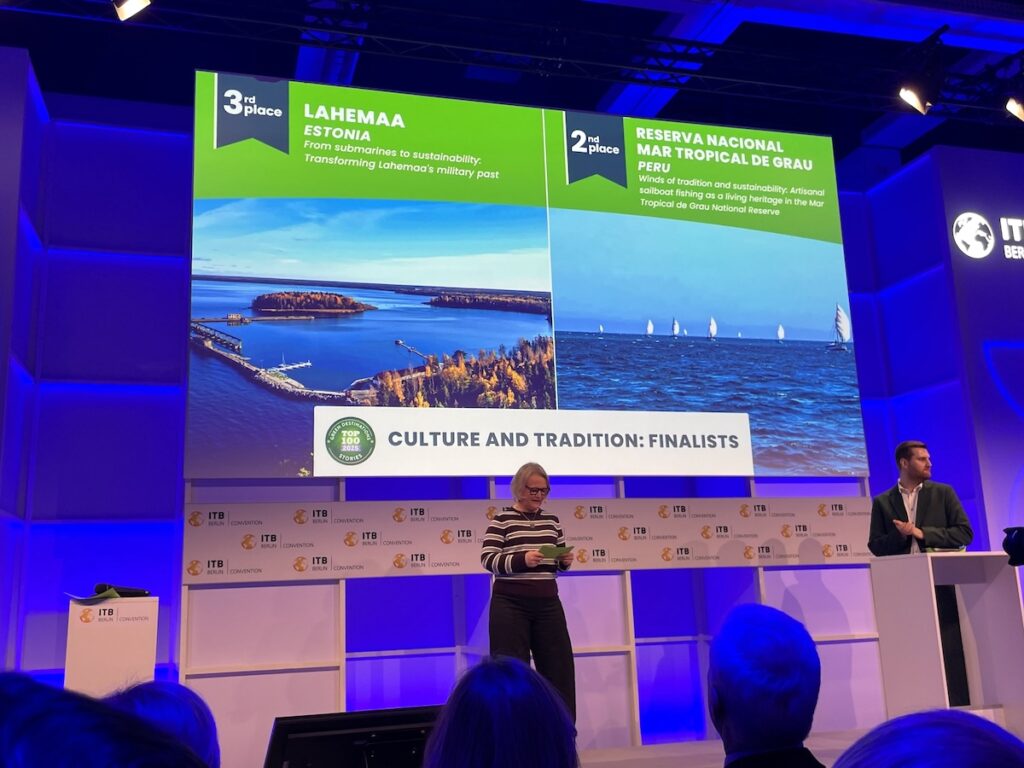
The Lahemaa region, located east of Tallinn, is known for its national park and for the Soviet-era military sites along its coastline, including the Hara submarine harbour. The transformation of Cold War ruins into a green tourism oasis maintained by local residents was recognised last night at the ITB travel trade fair in Berlin, the world’s largest professional tourism event.
Visit Lahemaa, an association of local municipalities, businesses, and civic and village communities, achieved third place in a competition organised by Green Destinations, a sustainable tourism development organisation. Tourist destinations from around the world submitted reports and stories describing practical actions taken in their regions to develop local economies while respecting the environment and the needs of local communities.
Lahemaa’s story, “From submarines to sustainability: transforming Lahemaa’s military past,” focuses on mapping, conserving, developing, and communicating the transformation of abandoned Soviet military sites that had fallen into disrepair and often carried painful memories for local residents. These locations are now gradually being integrated into tourism experiences.
Alongside the harbour at Hara, where the hulls of Soviet Navy submarines and other military vessels were demagnetised for decades to reduce their visibility on radar, the Lahemaa area also includes the Juminda and Pärispea peninsulas. In August 1941, 65 Soviet ships sank in a minefield off the coast of Juminda, taking as many as 15,000 people down with them. On the Pärispea peninsula, in the village of Suurpea, there once stood a large military base, radar station, and barracks complex. Today, the ruins of these structures lie partly on private land, and visiting them is therefore limited without arranging a guided tour with local experts.
The Lahemaa tourism development team has contributed to increasing guided services in the region, encouraging small-scale accommodation that places a lighter burden on the environment, and directing marked hiking and cycling routes away from nature conservation areas toward routes that also include military history sites. The area around Suurpea village has been cleaned up, and local cultural creators have organised pop-up exhibitions, light festivals, and other community activities there.
Hara harbour has for some time attracted small boat owners and visitors interested in military history, but increasingly also travelers who enjoy coastal life and outdoor activities. The harbour now offers restaurant and accommodation services as well as rental options for SUP boards, boats, and bicycles.
The international organisation Green Destinations is a pioneer in sustainable tourism. Its global environmental auditors evaluate tourism destinations each year based on their practices and long-term commitment to sustainability. Lahemaa has now been selected for the Green Destinations Top 100 list for the fifth time.
More ideas for eco-tourism in Estonia can be found on Visit Estonia’s themed website, and an extremely detailed overview completed in 2025 of Estonia’s military history sites, structures, and monuments, including Google Maps and explanatory texts in Estonia, is available here.
To learn more about this and similar topicsAward Green Destinations Hara harbour Lahemaa military history national park submarine base Tourism