What Happens When the Money Runs Out?
Text Antti Sarasmo
Photo The Baltic Guide archive / Hannu Lukkarinen
A Briefcase for a Wallet
What happens when money runs out? As in literally runs out, when there are no more bills or coins? This is what happened in Estonia in May 1992, and it led to serious problems.
Eventually, inflation had become so bad that small rouble bills were no longer counted individually. They were bundled into stacks of 100, and these bundles were simply thrown on the counter when buying something. They no longer fit in a wallet—people carried them in bags or briefcases. When paying, no one even bothered to check whether there were the correct number of, say, three-rouble notes in a bundle. The money in circulation lost value every single day.
The Soviet Union collapsed in August 1991, and along with it, the socialist economic system failed. That system had been based on administratively set prices and pre-planned production quantities. There was no inflation, and prices were printed directly on goods. But economic laws proved stronger than administration: if prices couldn’t adjust, availability did. There were shortages of everything in the Soviet Union, and much of the workday was spent standing in line. Whenever something appeared in a store, a queue immediately formed. Queuing was so typical that even children in apartment courtyards played the “queueing game”.
Estonia’s regained independence meant the liberalisation of imports. Goods flooded into the market, and everything sold quickly after years of scarcity. But imports had to be paid for in foreign currency, and as the rouble’s exchange rate deteriorated day by day, more and more cash was needed. Wages did rise, but so did prices—and cash started to run out.
Emergency Measures
Estonia began to run out of physical cash. The Soviet system had been entirely cash-based. There were no bank transfers, cheques, or debit cards. Bills were paid in post offices using cash, and cash was the only payment method in stores and restaurants. Even wages were handed out in cash.
Night after night in the spring of 1992, the top news story on television was about the movement of the “money train”. A train carrying roubles from a printing plant in Siberia was on its way to the western parts of the former Soviet Union. A couple of cars were promised to Estonia, which was still part of the rouble zone. But everyone looked out for themselves first. Estonia received some money—but far less than needed.
The first emergency solution was to pay wages into banks. That was new, and people had to go to the bank to withdraw their salaries. The system worked—but there wasn’t any more cash circulating than before.
Then came the idea of the “account rouble”. Money existed in people’s accounts, but couldn’t be withdrawn as cash. This required broad adoption of bank transfers—and so it happened. With account roubles, people could pay official fees like rent, taxes, or hospital bills. Company advertisements often listed two prices: how much cash was required for, say, a used Western washing machine, and how much could be paid with account roubles. Businesses used account roubles to pay things like taxes and customs duties.
But not all payments were to the state—and cash was still scarce. Estonia introduced cheques. A cheque could be written from the withdrawable portion of one’s account, and the recipient had the right to redeem it in cash—if any was available.
Meanwhile, as inflation surged, people bought anything they could. Salaries held their value better as erasers than as banknotes. Estonian households were full of goods.
Banana Republic Day
Talk of introducing a national Estonian currency and exiting the rouble zone had been ongoing. People debated who should appear on the bills, and what they should look like. Pictures of the proposed designs were published in newspapers, and everyone knew the change was coming—but the reform kept getting delayed.
Finally, Prime Minister Tiit Vähi appeared on the main evening news, and announced that the currency reform would take place in three days, on 20 June, 1992. Everyone could exchange up to 1500 roubles for Estonian kroons at a rate of 10 roubles = 1 kroon.
The result was an unprecedented shopping panic as people rushed to get rid of excess roubles. Everything was sold out. Shops came up with excuses to close: some had a “mandatory deep cleaning day”, some claimed inventory, others an “accident” or “technical issue”.
State-run liquor stores didn’t close—and people lined up. By the day of the currency reform, Estonia was “dry”—the alcohol stores had been cleaned out. Estonians called 19 June, 1992, “Banana Republic Day”—the last roubles were spent on bananas. Bananas were available but very expensive. Previously, a single banana might have been bought to share. Now people bought them by the kilo, and that evening, many families—children and maybe even the adults—sat munching this rare treat. It was the last night of the rouble.
Estonian Kroon Day
The Estonian kroon was introduced on 20 June, 1992. Everyone had already registered for the currency exchange, and each person had been assigned an exchange location. There were many exchange points, to avoid overwhelming queues.
This process effectively became Estonia’s first post-independence population census. A formal census might have raised concerns during the first year of independence, but now everyone registered themselves. There were 1,410,951 registered exchangers.
Currency exchange day was the only day in Estonian history with no recorded crimes. Even criminals were in line, and crime resumed the next day.
Exchange points were decorated with Estonian flags and fir branches. The Home Guard kept order, and the police guarded the money. But their presence wasn’t needed—cheerful people queued peacefully, seasoned by their Soviet queuing experience. Once they received their new kroons, families would marvel at them right there in the hallways of the exchange points, usually schools.
In Tallinn, on “Banana Republic Day”, people also bought staple foods like bread—stores were nearly emptied. But even on Kroon Day, bread was nearly sold out again as people went to stores with their new crisp bills and bought rye bread as their first purchase in their new currency.
Many stores still didn’t have coins for change, so they handed out chocolates or extra buttons depending on the type of shop.
A New Era Begins
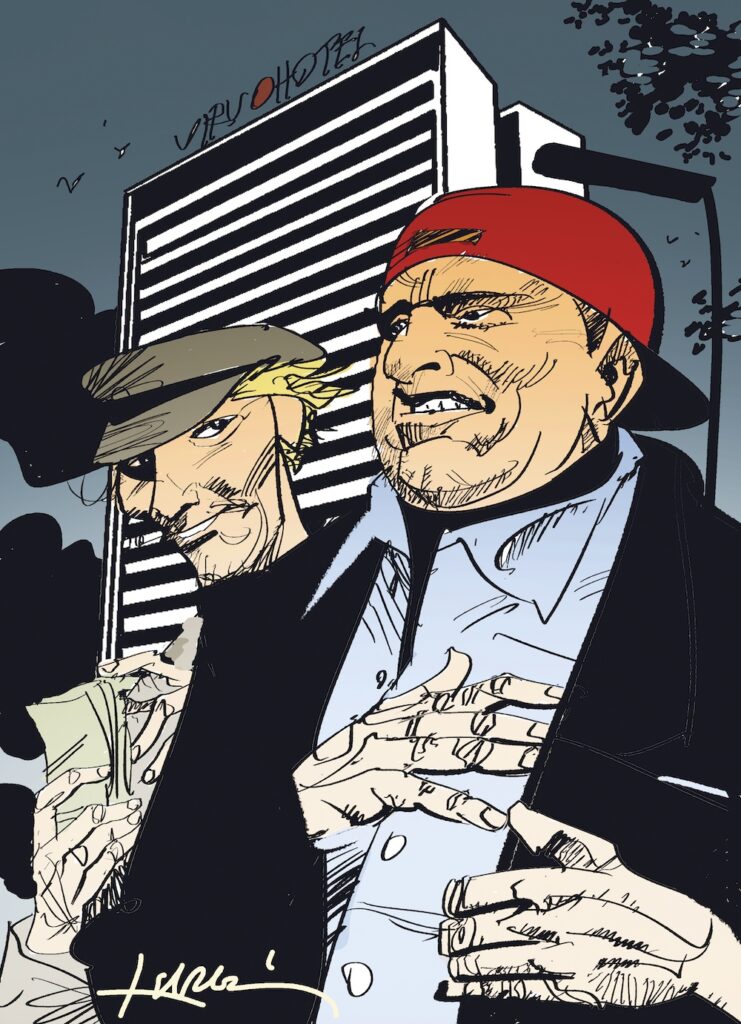
Even the “rich Westerners” had to queue on Kroon Day. In Tallinn, tourists could only exchange money at the official exchange point in Hotel Viru—and the line was long.
Across the country, the new currency was celebrated—it signaled the beginning of a better future and a way out of deepening economic hardship. The kroon was pegged to the German mark at a rate of 8 kroons = 1 mark. The first exchange limit was 150 kroons, which also became the average monthly salary in July.
Prices continued to rise, and Soviet-era industry collapsed. The economy was in bad shape—but the new currency meant Estonia had begun climbing out of the hole. It wasn’t until March 1993 that wage growth outpaced price inflation, and the crisis began to ease.
With the currency reform, all stores became “foreign currency shops” with Western goods. Estonians had to change their habits. Previously, people carried a month’s salary in cash, just in case they stumbled upon something to buy. Now, they needed a shopping list to make that monthly salary stretch through the new consumer paradise. While in the spring there was a shortage of banknotes—meaning no money—by summer, many simply ran out of money the traditional way.
Estonia joined the eurozone on 1 January, 2011.
To learn more about this and similar topicscurrency Estonian history kroon rouble ruble