Mart Laar’s Book on the Forest Brothers Now Available
Text Senja Lundin

Photo IlmaPress OÜ
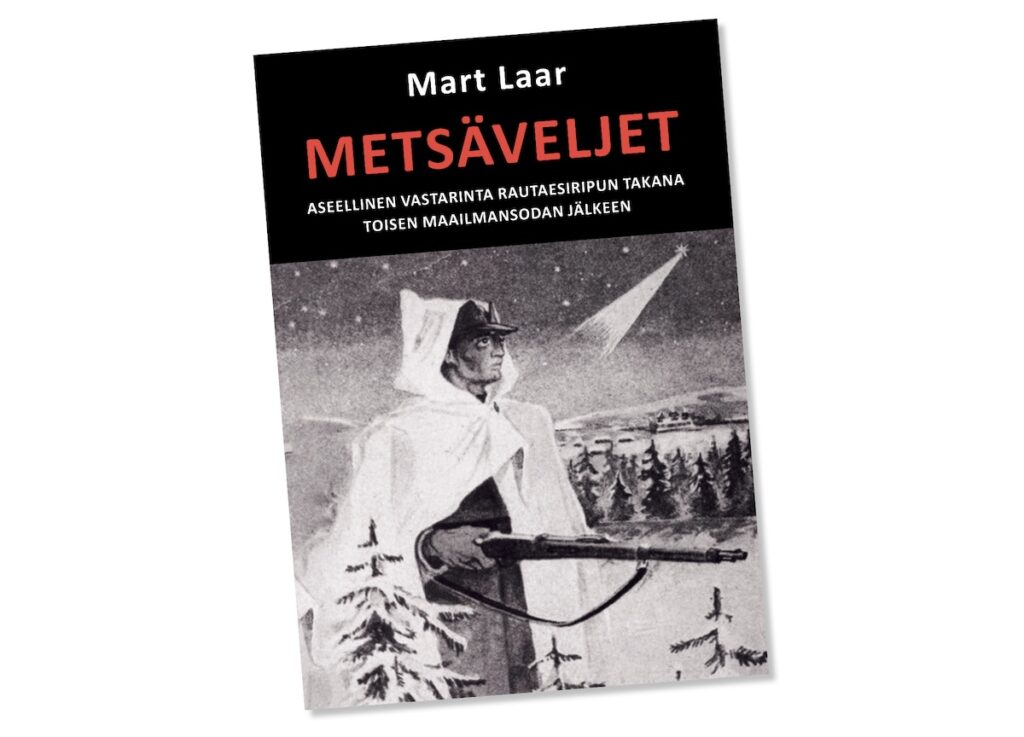
Historian Mart Laar’s book, “Forest Brothers: Armed Resistance Behind the Iron Curtain After World War II”, explores the resistance of the Baltic States’ freedom fighters—the Forest Brothers—during the Soviet occupation. The book examines the reasons behind the resistance, its impact, and the Soviet Union’s efforts to suppress it. For readers, the book also provides new insights into the resistance movements in Bulgaria, Poland, and Romania. Today, the Forest Brothers are honoured as freedom fighters, and have been commemorated in many ways.
The book, originally titled in Estonian “Sõda metsades. Relvastatud vastupanu raudse eesriide taga pärast II maailmasõda”, published in 2022, seeks to answer questions such as why and what kind of resistance occurred, where it was most active, and whether the Soviet Union achieved its goal in trying to crush the resistance movement. The book was translated and edited by Petteri Aarnos, and published by Ilmapress OÜ.
The Forest Brothers—in Estonian: metsavennad—were freedom fighters in the Baltic countries who resisted the Soviet occupation during and after World War II. Their activity peaked between 1944 and 1949. The Forest Brothers’ efforts were weakened by the mass deportations of 1949 and the forced collectivisation of agriculture. The general amnesty issued in 1955, after Joseph Stalin’s death, marked the end of their organised activities, though some individuals remained in hiding in the forests. Estonia’s last known Forest Brother is considered to be August Sabbe, who was discovered by KGB agents on September 28, 1978. Sabbe drowned—or was drowned—in the Võhandu River.
The longest-lasting resistance to Soviet rule occurred in Lithuania and Western Ukraine. For Finnish readers, the book also brings new information about the resistance in Bulgaria, Poland, and Romania.
After the restoration of independence in the Baltic States, the Forest Brothers have been recognised as freedom fighters. In their honour, memorials have been erected, books and documentaries have been produced, and streets and schools have been named after them.
“It is important for Europe to remember that one must always fight against an invader, as is currently being done in Ukraine,” Mart Laar states.
Earlier translations of Mart Laar’s books include “The Forgotten War” from 1993, and “Estonia Year Zero” from 2019. He has served, among other roles, as Estonia’s Prime Minister from 1992–1994 and 1999–2002, and Minister of Defence from 2011–2012.
To learn more about this and similar topicsEstonia Estonia behind the Iron Curtain Estonian history Estonian Politics Forest Brothers Mart Laar Soviet occupation